Author: James Carter

  • Oral Allergy Syndrome Symptoms: Signs, Causes, and Triggers

    Oral Allergy Syndrome Symptoms: Signs, Causes, and Triggers

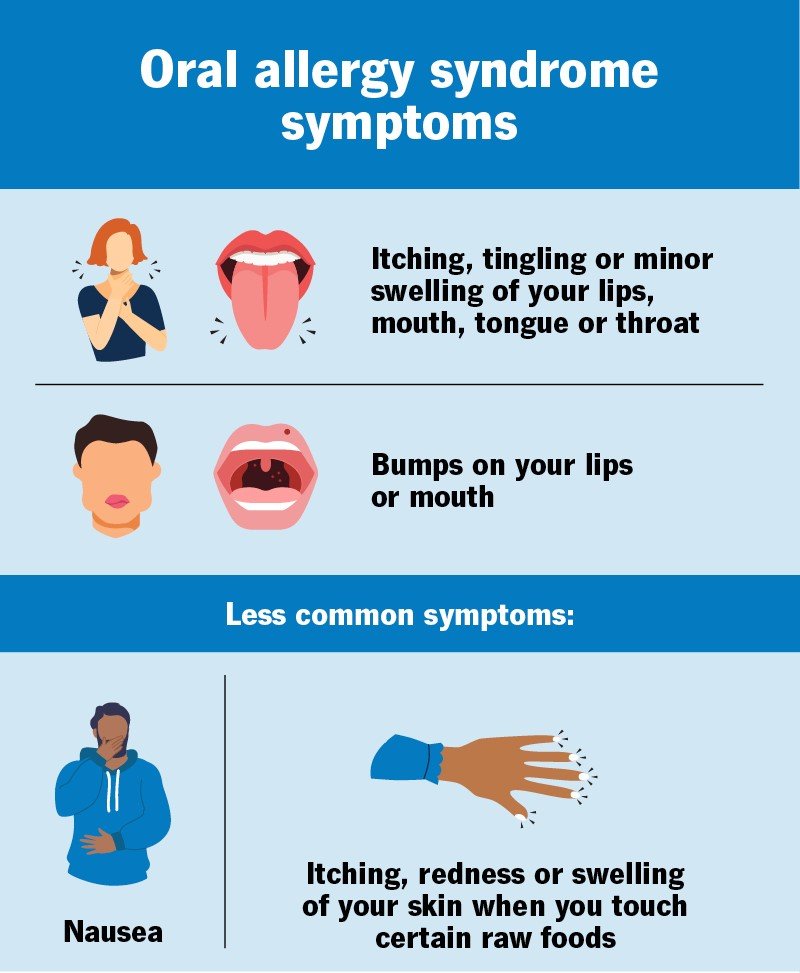
    Oral allergy syndrome symptoms are usually mild allergic reactions that affect the mouth and throat after eating certain raw fruits, vegetables, nuts, or other plant foods. The condition is also known as pollen-food allergy syndrome (PFAS) because it commonly occurs in people who are allergic to certain types of pollen. Typical symptoms include itching, tingling, or mild swelling of the lips, tongue, mouth, or throat.

    Although oral allergy syndrome is generally mild, understanding its symptoms and triggers is important because reactions can occasionally be more serious. If symptoms repeatedly appear after eating particular foods, an allergist or healthcare professional can help determine whether oral allergy syndrome or another type of food allergy is responsible.

    What Is Oral Allergy Syndrome?

    Oral allergy syndrome is a localized allergic reaction caused by cross-reactivity between proteins found in certain pollens and proteins found in particular foods.

    For example, someone with a pollen allergy may experience an itchy mouth after eating a raw apple. The immune system recognizes similarities between proteins in the pollen and proteins in the food. This can produce an allergic reaction shortly after the food is eaten.

    OAS most commonly affects the lips, mouth, tongue, roof of the mouth, and throat. Reactions are generally brief and mild, although more significant reactions can occur in rare cases.

    Common Oral Allergy Syndrome Symptoms

    The most recognizable oral allergy syndrome symptoms usually begin shortly after eating a trigger food.

    Common symptoms include:

    • Itching of the lips
    • Tingling of the lips or mouth
    • Itching inside the mouth
    • Tingling or itching of the tongue
    • Itching of the roof of the mouth
    • Itchy or irritated throat
    • Mild swelling of the lips
    • Mild swelling of the tongue
    • Minor swelling inside the mouth
    • Small bumps or irritation around the lips or mouth

    These symptoms generally remain concentrated around the mouth and throat. The American Academy of Allergy, Asthma & Immunology describes OAS as a localized IgE-mediated reaction that typically produces itching or tingling involving the lips, tongue, roof of the mouth, and throat.

    When Do Oral Allergy Syndrome Symptoms Appear?

    OAS symptoms usually develop soon after eating the triggering food. Because the reaction is related to direct contact with food proteins, a person may notice itching or tingling while eating or shortly afterward.

    For many people, symptoms disappear relatively quickly without treatment. Cleveland Clinic notes that OAS reactions are generally minor and often resolve quickly.

    Keeping track of when symptoms occur can be useful. If the same reaction repeatedly happens after eating a particular raw fruit or vegetable, discussing the pattern with a healthcare professional may help identify the trigger.

    Why Does Oral Allergy Syndrome Happen?

    The main reason OAS occurs is cross-reactivity.

    People with seasonal pollen allergies develop immune responses to specific pollen proteins. Some raw foods contain proteins that are structurally similar to those pollen proteins. The immune system can mistake the food proteins for the pollen allergens and trigger an allergic response.

    This explains why a person may tolerate a particular food in one form but experience symptoms when eating it raw.

    For example, some people with pollen-food syndrome may react to a fresh apple but tolerate cooked apple products. Heating can change the proteins responsible for the reaction.

    Common Food Triggers

    Oral allergy syndrome can involve many different foods, and triggers vary from person to person.

    Commonly associated foods include:

    • Apples
    • Peaches
    • Cherries
    • Pears
    • Plums
    • Apricots
    • Kiwi
    • Bananas
    • Melons
    • Carrots
    • Celery
    • Tomatoes
    • Cucumbers
    • Zucchini
    • Oranges
    • Almonds
    • Hazelnuts
    • Peanuts
    • Soybeans

    Not everyone with a particular pollen allergy will react to every food associated with that pollen. Individual reactions can vary considerably.

    Pollen and Food Connections

    Certain pollen allergies are associated with particular groups of foods.

    Birch Pollen

    Birch pollen is associated with reactions to foods such as apples, apricots, cherries, peaches, pears, plums, almonds, hazelnuts, carrots, and celery.

    Grass Pollen

    People with grass pollen allergies may experience reactions to foods such as melons, kiwi, oranges, tomatoes, and watermelon.

    Ragweed Pollen

    Ragweed pollen can be associated with reactions to bananas, cantaloupe, cucumber, honeydew melon, watermelon, and zucchini.

    These associations are not absolute. A person can have a pollen allergy without reacting to the related foods, and food reactions can vary between individuals.

    Why Raw Foods Often Cause More Problems

    One important feature of oral allergy syndrome is that symptoms often occur with raw foods.

    The proteins involved in pollen-food cross-reactivity can be sensitive to heat. Cooking, baking, canning, or other processing methods may alter these proteins enough that some people no longer experience symptoms.

    For example, someone who develops mouth itching after eating a raw peach may be able to tolerate a cooked or canned form.

    However, this should not be assumed to be safe for everyone. Some food allergies involve proteins that remain allergenic after cooking. Therefore, anyone who has experienced a significant allergic reaction should discuss food preparation and avoidance with an allergy specialist rather than testing foods independently.

    Other Possible Symptoms

    Although oral symptoms are the defining feature, OAS can sometimes cause symptoms outside the mouth.

    Possible additional symptoms include:

    • Nausea
    • Itching of the skin
    • Redness of the skin
    • Swelling of the skin after touching a raw trigger food

    These symptoms are less typical than the mouth and throat symptoms associated with OAS.

    If a reaction affects several areas of the body, especially the skin and respiratory system, it is important to consider whether the reaction could represent a more significant food allergy rather than simple localized OAS.

    Oral Allergy Syndrome vs. Food Allergy

    OAS and conventional food allergies can sometimes look similar, but there are important differences.

    OAS generally produces localized symptoms such as mouth itching, tingling, and mild swelling after eating certain raw plant foods. Traditional food allergies can produce symptoms involving multiple body systems, including hives, vomiting, wheezing, breathing problems, and potentially anaphylaxis.

    This distinction is important because not every reaction after eating a food should automatically be considered OAS.

    A healthcare professional may consider the person’s pollen allergy history, the food involved, the form of the food, timing of symptoms, and previous reactions when determining the likely cause.

    How Is Oral Allergy Syndrome Diagnosed?

    An allergist or other healthcare professional can evaluate suspected OAS.

    Diagnosis often begins with a detailed medical history. The healthcare professional may ask:

    • Which foods cause symptoms?
    • Were the foods raw or cooked?
    • How quickly did symptoms begin?
    • What symptoms occurred?
    • Does the person have seasonal allergies?
    • Has the reaction happened more than once?
    • Have there ever been breathing problems, widespread hives, dizziness, or other serious symptoms?

    Allergy testing may also be used when appropriate. Depending on the situation, testing can include skin testing, blood testing for specific IgE antibodies, or supervised food challenge testing.

    Accurate diagnosis matters because OAS can sometimes be confused with other food allergies or food-related conditions.

    Managing Oral Allergy Syndrome Symptoms

    The most common approach to managing OAS is avoiding foods that consistently cause symptoms, particularly in their raw form.

    Healthcare professionals may recommend avoiding specific trigger foods according to the severity and pattern of the person’s reactions.

    For some people, cooking or otherwise processing the food can reduce the reaction because heat changes the relevant proteins. However, whether a cooked version is safe depends on the specific allergy and individual circumstances.

    People should also be aware that reactions may become more noticeable during periods when seasonal pollen allergies are active. Cleveland Clinic notes that reactions to trigger foods may be stronger during periods when seasonal allergies are worse.

    Can Antihistamines Help?

    Some people may use antihistamines for mild allergy symptoms, but treatment should be based on individual medical advice.

    If a person has experienced more serious reactions, an allergist may recommend carrying an epinephrine auto-injector. Epinephrine is the first-line treatment for anaphylaxis, not a substitute for emergency medical care.

    Anyone who has been prescribed an epinephrine auto-injector should follow their healthcare professional’s instructions about when and how to use it.

    When Should You Seek Emergency Help?

    Most OAS reactions are mild, but serious allergic reactions are possible.

    Seek emergency medical attention if eating a food causes symptoms such as:

    • Difficulty breathing
    • Wheezing
    • Severe throat swelling
    • Difficulty swallowing
    • Significant swelling of the tongue or face
    • Severe dizziness or weakness
    • Fainting
    • Widespread hives accompanied by other serious symptoms

    Anaphylaxis can develop quickly and requires immediate treatment. AAAAI recommends emergency medical care when symptoms indicate a severe allergic reaction.

    If you have an epinephrine auto-injector and your healthcare professional has instructed you to use it for a severe allergic reaction, use it according to those instructions and seek emergency medical care.

    Can Oral Allergy Syndrome Go Away?

    OAS can change over time. Some people continue experiencing reactions to particular foods, while others may find that symptoms become less noticeable.

    There is currently no specific cure for OAS, but identifying trigger foods and managing underlying pollen allergies can help reduce problems.

    Because reactions vary, people should avoid assuming that a food is permanently safe or unsafe based solely on another person’s experience.

    Frequently Asked Questions

    Is oral allergy syndrome dangerous?

    OAS is usually mild and limited to the mouth and throat. Serious reactions are uncommon, but anaphylaxis can occur rarely.

    What are the first signs of oral allergy syndrome?

    The first signs are commonly itching, tingling, or mild swelling of the lips, tongue, mouth, or throat shortly after eating a trigger food.

    Can you eat cooked foods with oral allergy syndrome?

    Some people with OAS can tolerate cooked, baked, canned, or processed versions of foods that cause symptoms when eaten raw because heating can alter the responsible proteins. However, this does not apply to every food allergy.

    Does OAS mean you have a food allergy?

    OAS is itself a form of localized IgE-mediated food allergy associated with cross-reactivity between pollen and food proteins. However, a healthcare professional should determine whether a particular reaction is OAS or another type of food allergy.

    Should you see an allergist for oral allergy syndrome?

    If you repeatedly develop mouth or throat symptoms after eating particular foods, seeing an allergist can help identify the trigger and determine whether there is a risk of a more serious allergic reaction.

    Final Thoughts

    Oral allergy syndrome symptoms most commonly include itching, tingling, and mild swelling of the lips, tongue, mouth, or throat after eating certain raw plant foods. The condition is strongly associated with pollen allergies and occurs because the immune system can recognize similar proteins in pollen and certain foods.

    Most reactions are mild and short-lived, but repeated food reactions should not be ignored. Identifying trigger foods, understanding the difference between raw and cooked forms, and discussing recurring symptoms with an allergist can help with safe management. Severe symptoms such as difficulty breathing, significant throat swelling, dizziness, or fainting require immediate emergency medical attention.

  • Seong Gi-hun Character Development: From Survivor to Rebel

    Seong Gi-hun Character Development: From Survivor to Rebel

    Seong Gi-hun character development is one of the central elements of Squid Game. Played by Lee Jung-jae, Gi-hun begins the series as a financially struggling gambler who makes poor decisions but still shows compassion toward other people. His journey through the deadly games changes almost every part of his personality. By the end of the series, he has gone from a desperate man trying to solve his personal problems to someone willing to sacrifice himself for another person.

    Gi-hun’s transformation is not simple. He becomes stronger and more determined, but his experiences also leave him traumatized, angry, and emotionally exhausted. Across three seasons, his story explores guilt, humanity, responsibility, sacrifice, and the consequences of trying to resist a system built around exploitation.

    Gi-hun Before the Squid Game

    When viewers first meet Gi-hun, he is struggling with money, gambling, and his personal life. He is divorced and wants to maintain a relationship with his young daughter, but his financial problems make his situation increasingly difficult. Netflix describes him as a struggling gambler who enters the competition hoping to secure enough money to deal with his problems and improve his relationship with his daughter.

    Gi-hun is not introduced as a conventional hero. He can be irresponsible, impulsive, and selfish. His gambling creates additional problems, and his decisions often hurt the people around him. However, he also possesses an important quality that becomes central to his character development: empathy.

    His willingness to help others becomes particularly important once he enters the Squid Game. Even when surrounded by desperate contestants, Gi-hun repeatedly forms emotional connections with other players.

    Season 1: From Self-Interest to Empathy

    At the beginning of Season 1, Gi-hun primarily wants money. His motivation is personal and practical. He wants to escape debt and improve his circumstances.

    The games gradually change his priorities.

    As contestants are eliminated, Gi-hun witnesses the horrifying consequences of the competition. Instead of becoming completely numb to the violence, he becomes increasingly concerned about the people around him.

    His relationships with players such as Cho Sang-woo, Kang Sae-byeok, and Oh Il-nam reveal different aspects of his personality. He develops trust and emotional connections even though everyone is technically competing against everyone else.

    This is an important stage in Seong Gi-hun character development because the competition forces him to choose between survival and humanity.

    Gi-hun eventually wins the competition and receives the massive prize. On paper, this should solve his problems. Instead, the experience leaves him emotionally damaged. Winning does not erase the memories of everyone who died.

    Netflix describes Gi-hun as experiencing severe survivor’s remorse after winning the original competition.

    His transformation is therefore not simply about becoming stronger. It is about realizing that surviving does not necessarily mean escaping the consequences of what happened.

    The Red Hair and a New Gi-hun

    One of the clearest visual signs of Gi-hun’s transformation after Season 1 is his red hair.

    Director Hwang Dong-hyuk explained that Gi-hun undergoes a fundamental change after his experience in the first competition. His new appearance represents the fact that he is no longer the same person viewers met at the beginning of the story.

    Gi-hun still has the money, but he cannot simply return to his old life.

    He becomes increasingly obsessed with the Squid Game and the people responsible for organizing it. His decision to confront the system demonstrates how far his motivations have changed.

    The man who originally entered the competition for money now wants to understand and challenge the organization that destroyed so many lives.

    Season 2: Gi-hun Returns With a Purpose

    Season 2 shows perhaps the biggest shift in Gi-hun’s personality.

    He voluntarily returns to the Squid Game instead of entering because he needs money. His objective is connected to stopping the competition and confronting those behind it.

    Netflix’s coverage of Season 2 emphasizes the contrast between the Gi-hun seen in Season 1 and the character returning in Season 2. Hwang Dong-hyuk explained that something inside Gi-hun had been broken by everything he experienced, while Lee Jung-jae discussed how different Gi-hun’s state of mind had become.

    This difference changes the way Gi-hun approaches the games.

    In Season 1, he is largely reacting to circumstances. In Season 2, he enters with knowledge.

    He knows the rules. He understands how dangerous the games are. He knows that the people behind them are capable of manipulating the contestants.

    That knowledge gives him a different kind of confidence.

    However, it also creates a new problem: Gi-hun becomes increasingly focused on his mission.

    Gi-hun’s Conscience

    Although Gi-hun becomes darker in Season 2, his compassion does not completely disappear.

    Lee Jung-jae explained that conscience was an important part of his approach to the character. The actor wanted to preserve the goodness that existed within Gi-hun during the first season while showing how his experiences had changed him.

    This creates an important contradiction.

    Gi-hun wants to destroy the Squid Game, but he is forced to operate inside the very environment he wants to eliminate.

    He must make decisions that affect other players while dealing with people who have completely different motivations.

    The result is a character who is more determined than before but also more emotionally unstable.

    The Failed Rebellion

    Gi-hun’s attempt to fight back against the organization becomes a major turning point.

    His rebellion fails, and the consequences are devastating. His close friend Jung-bae is killed, leaving Gi-hun devastated.

    By the end of Season 2, Gi-hun is physically and emotionally broken. Netflix describes him as being at his lowest point after the failed rebellion and Jung-bae’s death.

    This failure is important because it challenges Gi-hun’s belief that determination alone can change the system.

    He entered Season 2 believing he could use his knowledge of the games to fight back. Instead, the system proves capable of adapting to his resistance.

    His confidence is replaced by grief.

    Season 3: Gi-hun at His Lowest Point

    Season 3 continues directly from Gi-hun’s emotional collapse.

    The creator described the final season as focusing on Gi-hun’s transformation and how he responds to the challenges placed in front of him.

    At this stage, Gi-hun is no longer the cheerful and sometimes foolish man from Season 1.

    He has lost friends, experienced betrayal, and failed to stop the competition.

    His motivation remains connected to ending the Squid Game, but his emotional condition becomes much darker.

    Netflix’s character guide explains that Gi-hun remains determined to take down the game even after his failed rebellion, while his allies help remind him of his conscience and kindness.

    This is significant because Gi-hun’s final struggle is not only against the people running the games.

    It is also against himself.

    Gi-hun Reaches His Breaking Point

    One of the most important moments in his Season 3 development occurs when his anger leads him to kill Dae-ho.

    Until this point, Gi-hun had generally avoided killing another contestant himself. His anger toward Dae-ho becomes overwhelming after the failed rebellion and Jung-bae’s death.

    Netflix describes this moment as Gi-hun reaching his “rock bottom.” Hwang explained that Gi-hun redirects his guilt and blames Dae-ho for the deaths that followed the failed uprising.

    This moment shows how far Gi-hun has fallen.

    The compassionate survivor from Season 1 is capable of violence against another player. His moral struggle has become much more complicated.

    However, this does not mean his humanity has completely disappeared.

    Instead, the story uses this low point to make his later decisions more meaningful.

    The Conflict With the Front Man

    Gi-hun’s relationship with the Front Man becomes one of the most important parts of his character arc.

    The two characters represent opposing views about human nature.

    Gi-hun continues to believe that people can choose compassion even under terrible circumstances. The Front Man increasingly views the players through a cynical perspective.

    Their conflict therefore becomes more than a physical battle.

    It becomes a conflict over whether people are fundamentally capable of maintaining their humanity when placed under extreme pressure.

    The Front Man attempts to destroy Gi-hun’s belief in humanity. Netflix describes their Season 3 conflict as a psychological and moral battle over Gi-hun’s convictions.

    This makes Gi-hun’s final decisions especially important.

    Gi-hun’s Final Transformation

    By the conclusion of the series, Gi-hun’s development reaches its final stage.

    He ultimately sacrifices himself to protect Jun-hee’s baby. Netflix’s explanation of the finale identifies Gi-hun’s sacrifice as the conclusion of his journey and connects it to his rediscovered humanity and conscience.

    This decision completes the transformation that began in Season 1.

    At the beginning of the story, Gi-hun enters the game because he wants money.

    By the end, he gives up his own life so another person can have a chance to live.

    That contrast is the foundation of his character arc.

    From Survivor to Protector

    Gi-hun’s journey can be understood through several stages:

    StageGi-hun’s Main Motivation
    Before the gamesMoney and personal survival
    Season 1Survival and helping others
    After Season 1Guilt and understanding the game
    Season 2Stopping the Squid Game
    Failed rebellionFighting back despite personal loss
    Season 3Ending the system while struggling with despair
    FinaleProtecting another life through sacrifice

    This progression shows why Gi-hun is more complicated than a traditional hero.

    He does not simply become stronger with every season.

    Sometimes he becomes weaker.

    Sometimes he makes worse decisions.

    Sometimes he loses control.

    But each experience forces him to reconsider what kind of person he wants to be.

    The Importance of Humanity

    The central idea behind Seong Gi-hun character development is humanity.

    The Squid Game is designed to reduce people to numbers and contestants. Players become competitors, and survival becomes more important than relationships.

    Gi-hun repeatedly challenges that idea.

    His friendships, guilt, compassion, anger, and eventual sacrifice demonstrate that he refuses to see human life as merely another part of the game.

    Even after experiencing betrayal and extreme violence, he continues to struggle with the question of whether people can remain human under unbearable circumstances.

    The final season makes this idea especially clear. Hwang Dong-hyuk explained that Gi-hun’s sacrifice was connected to the larger message that people cannot build a future by pursuing only immediate self-interest and refusing sacrifice or responsibility.

    Conclusion

    Seong Gi-hun character development is ultimately a journey from selfish survival to selfless sacrifice.

    He begins as an irresponsible gambler struggling with debt and family problems. The first Squid Game forces him to confront death and develop empathy. Winning does not bring him peace because he carries the memories and guilt of the people who died.

    In Season 2, Gi-hun returns with a completely different purpose. He is no longer interested primarily in the prize money. He wants to stop the organization responsible for the games. His failed rebellion and Jung-bae’s death push him into deeper despair.

    Season 3 takes that transformation even further. Gi-hun reaches a moral low point, struggles with guilt and anger, and confronts the Front Man in a battle over human nature. Yet he ultimately rediscovers the compassion that defined him earlier in the story.

    His final sacrifice completes the arc.

    The man who once entered the Squid Game because he wanted to save himself eventually gives his life to protect someone else. Through Gi-hun, Squid Game presents a character whose greatest transformation is not becoming more powerful, but deciding that another person’s life is worth more than his own survival.

  • Ikigai Morning Routine: Simple Habits for a Purposeful Day

    Ikigai Morning Routine: Simple Habits for a Purposeful Day

    An Ikigai morning routine can help you begin the day with greater intention, calm, and purpose. The Japanese concept of ikigai is often translated as a “reason for being” or something that makes life feel worth living. It does not necessarily mean having one huge life mission. Ikigai can also be found in ordinary activities, relationships, hobbies, work, and small moments that give your day meaning.

    A morning routine inspired by ikigai focuses on simple and repeatable habits rather than an extreme schedule. Instead of trying to wake up at 5 a.m., complete a long workout, read dozens of pages, and finish a huge list of tasks, the goal is to create a morning that connects you with what matters to you.

    What Is an Ikigai Morning Routine?

    An Ikigai morning routine is a way of starting your day with activities that support purpose, awareness, movement, gratitude, and personal enjoyment.

    The word ikigai comes from Japanese and is commonly associated with having something that makes life meaningful or worthwhile. The popular four-circle diagram often connects what you love, what you are good at, what the world needs, and what you can be paid for. However, the traditional Japanese meaning of ikigai is broader than this diagram and can include simple everyday sources of meaning and satisfaction.

    This makes the idea useful for a morning routine. Your ikigai does not have to be a successful career or a major personal achievement. It could be spending time with family, working on a creative project, caring for plants, learning something new, exercising, or simply enjoying a peaceful morning.

    Why Start the Day With Ikigai?

    The first part of the day can influence how you approach the hours that follow. A rushed morning filled with notifications and distractions can make it difficult to focus on meaningful activities.

    An ikigai-inspired approach creates space before the day becomes busy. You can use this time to identify what matters, take care of yourself, and decide where your attention should go.

    The important point is consistency. Ikigai is often discussed through the idea of small daily sources of meaning rather than waiting for one dramatic discovery. Current discussions of ikigai also emphasize small, repeatable habits as a practical way to bring purpose into everyday life.

    1. Wake Up Without Immediately Checking Your Phone

    One of the simplest ways to improve an Ikigai morning routine is to create a short period without your phone.

    When you immediately check social media, messages, emails, or news, your attention can quickly shift toward other people’s priorities. Instead, give yourself a few minutes to wake up naturally and decide what you want from the day.

    You do not need to avoid your phone for hours. Even 10 to 20 minutes without unnecessary notifications can give you an opportunity to think before becoming distracted.

    During this time, ask yourself:

    • What am I looking forward to today?
    • What is important to me right now?
    • What is one meaningful thing I can accomplish?
    • Who or what am I grateful for?

    These questions can make your morning more intentional.

    2. Take a Few Quiet Minutes

    An ikigai morning does not need to be complicated. Sit quietly for a few minutes and pay attention to your breathing.

    You can close your eyes, take several slow breaths, and simply notice how you feel. The goal is not necessarily to achieve perfect meditation. It is to create a small pause between waking up and beginning your responsibilities.

    Some people may prefer prayer, reflection, journaling, or quiet contemplation instead.

    The important part is creating a moment in which you are present rather than immediately rushing into the next task.

    3. Move Your Body

    Movement is another useful part of an Ikigai morning routine. It does not have to mean an intense gym session.

    A short walk, stretching session, mobility routine, yoga practice, or other light physical activity can be enough to get your body moving.

    Some Japanese morning practices are associated with gentle movement, including Radio Taiso, a short exercise routine involving simple movements. Modern routines inspired by ikigai frequently recommend light movement rather than making every morning workout highly demanding.

    Try starting with 10 to 20 minutes of movement.

    For example:

    1. Stretch your shoulders and neck.
    2. Move your arms and legs.
    3. Do a few bodyweight exercises.
    4. Take a short walk outside.
    5. Finish with relaxed breathing.

    The objective is consistency. A simple routine you can repeat is often easier to maintain than an exhausting routine that you abandon after a few days.

    4. Get Some Natural Light

    Spending some time outside in the morning can make your routine feel more connected to the natural beginning of the day.

    You might sit near a bright window, walk outside, or simply spend a few minutes in an outdoor space.

    A morning walk can combine several habits at once: movement, fresh air, quiet reflection, and time away from screens.

    Rather than treating the morning as a race to complete as many tasks as possible, use it as an opportunity to slow down and become aware of your surroundings.

    5. Practice Gratitude

    Gratitude can be another simple component of an Ikigai morning routine.

    You do not need to write a long gratitude journal. Write down one or two things you appreciate.

    They can be extremely ordinary:

    • Your family
    • A peaceful morning
    • Good health
    • A friend
    • Your work
    • A hobby
    • A meal
    • A new opportunity
    • Having another day to learn something

    The purpose is not to pretend everything is perfect. Instead, gratitude can help you notice positive aspects of your life that are easy to overlook.

    Recent writing on ikigai-inspired morning habits similarly emphasizes small moments of gratitude and purposeful action rather than complicated routines.

    6. Identify One Purposeful Action

    This may be the most important step in an Ikigai morning routine.

    Choose one action that gives your day direction.

    Instead of writing a list of 20 tasks, ask:

    “What is one thing I can do today that genuinely matters?”

    It could be finishing an important work project, helping someone, practicing a skill, spending meaningful time with family, exercising, studying, or making progress on a creative project.

    The action does not need to change your life.

    Small progress counts.

    For example, if your long-term goal is learning a new skill, spending 20 minutes practicing it can be a purposeful action. If you want stronger relationships, sending a thoughtful message to someone can be meaningful.

    This reflects a broader understanding of ikigai in which purpose can exist within ordinary daily activities.

    7. Enjoy Something Small

    An Ikigai morning routine should not become another productivity competition.

    Make room for something you genuinely enjoy.

    You might drink tea or coffee slowly, listen to music, read a few pages, care for a plant, watch the sunrise, cook breakfast, or spend time with someone you love.

    These small pleasures matter because ikigai is not only about productivity or achievement. The concept can include everyday experiences that make life feel valuable and enjoyable.

    Your morning should contain at least one activity that you want to do, not simply something you believe you should do.

    8. Eat Breakfast Mindfully

    If you eat breakfast, try not to rush through it while staring at your phone or working.

    Instead, slow down and pay attention to the food.

    You can use breakfast as another opportunity to practice awareness. Notice the taste, texture, temperature, and how you feel while eating.

    Some modern discussions of Japanese-inspired routines also connect mindful eating with the principle of hara hachi bu, traditionally associated with stopping when you are around 80% full.

    However, there is no requirement to follow a specific eating rule to practice ikigai. The broader goal is to be more conscious of your everyday habits.

    9. Spend Time on Something Meaningful

    Once your basic morning habits are finished, dedicate some time to something connected with your interests or values.

    This could be:

    • Writing
    • Studying
    • Designing
    • Editing videos
    • Reading
    • Exercising
    • Learning a language
    • Building a business
    • Practicing an instrument
    • Working on a creative project

    This is where your personal version of ikigai can become visible.

    You may discover that certain activities consistently make you feel engaged and satisfied. Paying attention to these patterns can help you understand what gives your life meaning.

    10. Keep Your Routine Simple

    One of the biggest mistakes people make when creating a morning routine is adding too many habits.

    A routine containing 15 different steps may look impressive, but it can quickly become difficult to maintain.

    A simpler Ikigai morning routine could be:

    Wake up → breathe → move → reflect → choose one purpose → enjoy breakfast → begin meaningful work.

    That is enough.

    You can gradually adjust the routine based on your schedule and personality.

    The purpose is not to copy somebody else’s morning perfectly. It is to create a beginning to the day that works for you.

    A Simple 30-Minute Ikigai Morning Routine

    If you have limited time, try this 30-minute version:

    TimeActivity
    0–5 minutesWake up and avoid unnecessary phone use
    5–10 minutesBreathing, prayer, meditation, or quiet reflection
    10–20 minutesWalking, stretching, or light exercise
    20–25 minutesWrite one thing you appreciate
    25–30 minutesChoose your most meaningful task for the day

    You can then continue with breakfast and your normal responsibilities.

    The routine does not need to be identical every day. Flexibility is important because your energy, schedule, and responsibilities will change.

    A Longer 60-Minute Ikigai Morning Routine

    If you have more time, you can expand the routine:

    5 minutes: Quiet reflection or breathing

    10 minutes: Stretching and mobility

    15 minutes: Outdoor walk

    10 minutes: Breakfast or tea without distractions

    5 minutes: Gratitude journaling

    5 minutes: Decide your main purpose for the day

    10 minutes: Start a meaningful personal project

    This structure gives you time for your body, mind, relationships, and personal interests without turning the morning into an exhausting checklist.

    How to Find Your Personal Ikigai Through Your Morning

    Your morning routine can also help you understand your own ikigai.

    Pay attention to activities that repeatedly make you feel engaged, useful, peaceful, or satisfied.

    Ask yourself:

    Who do I enjoy helping?

    What kind of work feels meaningful to me?

    What small moments make an ordinary day feel better?

    You do not have to answer all these questions immediately.

    Your understanding of ikigai can develop gradually as you observe your own life.

    Ikigai Is Not About Having a Perfect Morning

    There is no perfect Ikigai morning routine.

    Some mornings will be productive. Others will be rushed. Sometimes you will sleep late, skip exercise, or spend too much time on your phone.

    That does not mean you have failed.

    The value of a routine comes from returning to it.

    Ikigai is better understood as something that can be cultivated through everyday life rather than as a single achievement that you discover once and permanently possess. The Japanese concept can include relationships, activities, work, hobbies, and other sources of value and joy.

    Therefore, do not worry about making every morning perfect.

    Focus on making it meaningful.

    Final Thoughts

    An Ikigai morning routine is ultimately about starting your day with intention rather than automatically moving from one distraction to another.

    You can begin with a few minutes of quiet, add gentle movement, get some natural light, practice gratitude, enjoy a simple breakfast, and choose one meaningful action.

    Most importantly, remember that ikigai does not have to be a huge life purpose. It can exist in ordinary moments and activities that make your life feel worthwhile.

    Start small. Choose habits that genuinely fit your life, repeat them consistently, and pay attention to what brings you a sense of meaning and satisfaction.

    A purposeful day does not necessarily require a complicated morning. Sometimes, a few intentional minutes are enough to change the way you approach the rest of the day.

  • How to Find Hidden Files on Android

    How to Find Hidden Files on Android

    If you want to know how to find hidden files on Android, you can usually locate them through your phone’s built-in file manager or the Files by Google app. Android can hide certain files and folders for different reasons, including protecting system data, keeping app-related files organized, or preventing users from accidentally modifying important information.

    Some hidden files are easy to access once you enable the correct setting, while other folders may remain restricted because of Android’s storage and security rules. In this guide, you will learn how to find hidden files on Android, how to recognize hidden folders, how to make them visible again, and what to do if you still cannot access them.

    What Are Hidden Files on Android?

    Hidden files are files or folders that do not normally appear when you browse your phone’s storage. On Android, many hidden files have a period (.) at the beginning of their name.

    For example:

    • .cache
    • .nomedia
    • .thumbnails
    • .FilesByGoogleTrash

    A folder such as .private may also remain invisible until hidden-file viewing is enabled.

    Hidden files can belong to apps, Android itself, or the user. Some contain temporary information, while others can affect how applications work. Because of this, you should avoid deleting an unfamiliar hidden file unless you know exactly what it does.

    How to Find Hidden Files on Android Using Files by Google

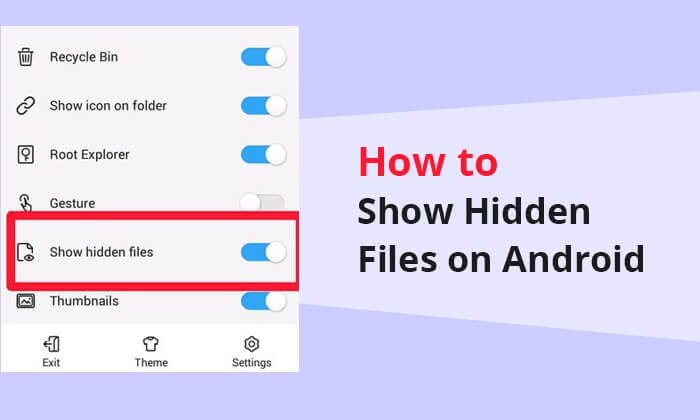
    One of the simplest ways to find hidden files is through Files by Google. The app includes a setting that allows hidden files to appear while browsing storage. Google’s support documentation confirms that the option is available under the app’s Settings and Browse section.

    Follow these steps:

    Step 1: Open Files by Google

    Open the Files by Google application on your Android phone.

    If it is already installed, you can find it in your app drawer. Some Android phones may instead use a manufacturer-specific file manager.

    Step 2: Open the Menu

    Tap the three-line menu icon in the upper-left corner of the Files by Google app.

    This opens the navigation menu.

    Step 3: Open Settings

    Select Settings from the menu.

    Inside Settings, look for the browsing-related options.

    Step 4: Enable Show Hidden Files

    Find Show hidden files and turn the option on.

    Google’s Files by Google support instructions specifically recommend enabling this setting when you need to view hidden files or folders.

    Step 5: Browse Internal Storage

    Return to the main Files screen and select Internal storage.

    You should now be able to see hidden files and folders alongside your regular files.

    Folders beginning with a period may now become visible.

    How to Find Hidden Folders on Android

    Finding hidden folders works in much the same way as finding hidden files.

    After enabling Show hidden files, open your internal storage and look through folders such as:

    • DCIM
    • Pictures
    • Download
    • Movies
    • Music
    • Documents
    • Android

    A hidden folder may have a name beginning with a period, such as .foldername.

    For example, if you accidentally rename a folder from Photos to .Photos, Android may treat it as hidden. Once hidden-file viewing is enabled, you can locate the folder again. A recent Google Files community example describes this exact situation and recommends enabling Show hidden files and removing the period from the folder name if appropriate.

    How to Find Hidden Photos and Videos

    If photos or videos appear to be missing from your gallery, they may sometimes be stored in a location that your gallery application does not display.

    First, enable hidden files in your file manager and check common media folders.

    Look inside:

    • DCIM
    • Pictures
    • Movies
    • Download
    • WhatsApp media folders
    • App-specific media folders

    You may also encounter a file called .nomedia.

    A .nomedia file can be used by Android applications to tell media-scanning services not to display media from a particular folder in gallery or media applications. Therefore, a photo can exist on the phone while not appearing in your normal gallery view.

    If you discover important photos or videos, do not immediately delete unfamiliar files. First verify their location and make a backup.

    How to Find Hidden Downloaded Files

    Sometimes a downloaded file appears to have disappeared even though it was successfully saved.

    Start by opening your file manager and checking the Download folder. If the file is not visible, enable hidden-file viewing and search again.

    You can also search for the file by its name.

    Files by Google provides file information such as the file’s location and modified time, which can help you determine where a particular file is stored.

    If a downloaded file was renamed with a period at the beginning, it may become hidden. For example:

    video.mp4

    could become:

    .video.mp4

    After enabling hidden files, the file should become visible.

    How to Find Hidden Files on Samsung Phones

    Samsung phones commonly include the My Files application.

    The exact menu names can vary depending on the One UI version, but the general process is:

    1. Open My Files.
    2. Look for the app’s settings menu.
    3. Find the option related to displaying hidden system files.
    4. Enable it.
    5. Return to internal storage.
    6. Browse the folders where you believe the missing file is located.

    If your Samsung phone does not provide the option you need, you can also use Files by Google and enable its Show hidden files setting.

    How to Find Hidden Files on Xiaomi, Redmi, and POCO

    Xiaomi, Redmi, and POCO devices may use their own file manager application.

    Open the File Manager and check its settings for an option related to hidden files or hidden folders.

    Once enabled, browse your internal storage and check folders such as Download, DCIM, Pictures, and other locations where the missing file may have been saved.

    The exact interface can differ between MIUI, HyperOS, and different device models, so the names of individual options may not always be identical.

    Why Can’t I See Android/data?

    One important distinction is that hidden files and protected Android folders are not necessarily the same thing.

    You might enable Show hidden files and still be unable to access everything inside Android/data.

    This is because newer Android versions place restrictions on access to certain app-specific storage directories. Google Files community discussions also note that some folders can remain inaccessible because they are protected by the Android system.

    Therefore, if you cannot open Android/data, enabling hidden files may not completely solve the problem.

    The restriction is different from simply having a hidden file.

    Why Are Some Android Files Hidden?

    Android and applications can hide files for several reasons.

    System protection

    Some files are important to Android’s operation. Hiding them reduces the chance of users accidentally modifying or deleting them.

    App data

    Applications can create folders and files that are intended to be managed by the application rather than manually by the user.

    Temporary files

    Apps may create cache files and temporary data that users normally do not need to interact with.

    Media management

    Files such as .nomedia can affect whether media stored in a folder appears in media applications.

    User-created hidden folders

    Users can also create hidden files and folders by placing a period at the beginning of the filename.

    Should You Delete Hidden Files?

    You should be careful before deleting hidden files.

    Some hidden files are harmless temporary files, but others may be required by Android or an installed application. Deleting the wrong file can cause an app to lose data or behave unexpectedly.

    Google’s Files community guidance notes that hidden files can include helper files used by apps and the system, and some should not be deleted because they are needed for normal operation.

    Before deleting anything, check:

    1. The file name.
    2. The folder where it is located.
    3. The file size.
    4. The file type.
    5. Which application created it.
    6. Whether you have a backup.

    If you are unsure, leave the file alone.

    How to Hide the Files Again

    After finding the files you need, you can disable hidden-file viewing.

    In Files by Google:

    1. Open the app.
    2. Tap the menu icon.
    3. Select Settings.
    4. Find Show hidden files.
    5. Turn the option off.

    This returns the normal browsing view, where hidden files are not displayed by default.

    What If Your Files Are Still Missing?

    If enabling hidden files does not help, the file may not actually be hidden.

    Check the following locations:

    • Internal storage
    • SD card
    • Download folder
    • DCIM
    • Pictures
    • Documents
    • Movies
    • App-specific folders
    • Trash or Recently Deleted

    Files deleted through Files by Google can remain in its Trash for a period before permanent deletion. Google states that files in Trash remain for 30 days before being automatically deleted, although availability and behavior can vary by Android version and feature.

    You should also search for the filename directly rather than relying only on folder browsing.

    Frequently Asked Questions

    Can Android hide files automatically?

    Yes. Android and applications can use hidden files and folders for system, application, cache, and media-management purposes.

    How do I show hidden files on Android?

    Open Files by Google, go to Menu → Settings, and enable Show hidden files.

    Why do folders starting with a dot disappear?

    A period at the beginning of a filename or folder name can make it hidden from normal file browsing. Enabling hidden-file viewing can make it visible again.

    Can I recover a hidden file?

    If the file still exists on your phone, enabling hidden files can make it accessible. If it was deleted, check your file manager’s Trash or other backup locations.

    Why can’t I access Android/data?

    Some Android versions restrict access to app-specific directories. This is a system access restriction and is not necessarily related to hidden-file settings.

    Conclusion

    Learning how to find hidden files on Android is usually straightforward. The easiest approach is to open Files by Google, go to Settings, enable Show hidden files, and then browse your internal storage. Hidden folders often have names beginning with a period, which makes them easy to identify once hidden-file viewing is enabled.

    However, not every inaccessible file is simply hidden. Android also protects certain system and app-specific directories, particularly on newer Android versions. If you cannot access a folder such as Android/data, the issue may be related to Android’s storage restrictions rather than hidden-file settings.

    Always be careful when modifying hidden files. If you are unsure what a file does, make a backup before deleting or changing it.

  • Hypnic Jerk Causes: Why Do They Happen?

    Hypnic Jerk Causes: Why Do They Happen?

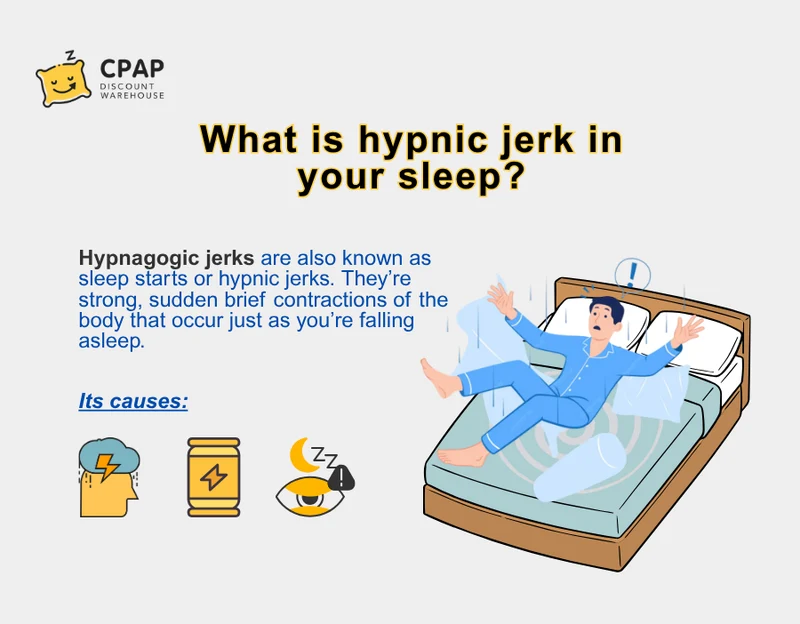
    Have you ever been about to fall asleep when your body suddenly jerks, your leg kicks, or you feel as though you are falling? This sudden movement is commonly known as a hypnic jerk. Understanding the hypnic jerk causes can help explain why these unexpected movements happen and whether they are something to worry about.

    Hypnic jerks are sudden, involuntary muscle movements that usually occur during the transition from wakefulness to sleep. They can affect one muscle, such as an arm or leg, or involve several parts of the body at once. Some people also experience a brief falling sensation or a startled feeling when the jerk occurs.

    For most people, hypnic jerks are common and harmless. However, certain factors can make them happen more frequently, including sleep deprivation, stress, caffeine consumption, and physical exhaustion.

    What Is a Hypnic Jerk?

    A hypnic jerk, sometimes called a hypnagogic jerk or sleep start, is a brief involuntary muscle contraction that occurs as you fall asleep. It can happen when your body begins moving from wakefulness into the early stages of sleep.

    The movement can be very small, such as a slight twitch in your finger, or strong enough to make your entire body jump. Some people describe the experience as feeling like they are falling from a height or suddenly losing their balance.

    Hypnic jerks can happen without waking you completely. In other cases, the movement can be strong enough to bring you back into full wakefulness.

    The exact biological mechanism behind hypnic jerks is not completely understood. Researchers believe they may involve temporary activity or misfiring within the nervous system during the transition into sleep.

    Common Hypnic Jerk Causes

    Several factors may increase the likelihood of experiencing hypnic jerks. The most commonly discussed causes and triggers involve sleep habits, stimulation of the nervous system, and difficulty relaxing before bedtime.

    1. Lack of Sleep

    One of the important hypnic jerk causes is sleep deprivation. When you regularly get less sleep than your body needs, your normal sleep cycle can become disrupted.

    Sleep deprivation can make the transition between wakefulness and sleep less smooth. This may increase the likelihood of sudden muscle movements when you finally fall asleep.

    A poor sleep schedule can also create a cycle in which tiredness makes hypnic jerks more noticeable, while repeated jerks make it harder to fall asleep.

    Getting a consistent amount of sleep each night may therefore help reduce the frequency of these movements.

    2. Stress and Anxiety

    Stress is another commonly reported trigger.

    When you are stressed, your mind may remain active even when you are physically tired. Racing thoughts can make it harder to relax and transition naturally into sleep.

    Stress can also contribute to poor sleep quality and sleep deprivation, both of which may increase the likelihood of hypnic jerks.

    Creating a relaxing bedtime routine may help. Reading, slow breathing, meditation, or simply reducing stimulating activities before bed can make the transition into sleep easier.

    3. Caffeine

    Caffeine is a stimulant that can affect the nervous system and interfere with sleep.

    Coffee, energy drinks, tea, cola, and some other products contain caffeine. Consuming large amounts, particularly later in the day, can make it harder to fall asleep and may keep you in lighter stages of sleep.

    Because caffeine can contribute to sleep disruption, it may also increase the likelihood of experiencing hypnic jerks in some people.

    If you regularly experience hypnic jerks at night, paying attention to when you consume caffeine may be useful.

    4. Physical Exhaustion

    Being physically exhausted can also play a role.

    After a demanding day, your body may become extremely tired while your nervous system remains stimulated. This combination can affect the transition into sleep.

    Physical exhaustion is therefore considered another possible factor associated with more frequent hypnic jerks.

    However, regular exercise is generally beneficial for sleep. The issue may be more related to excessive exertion or intense activity very close to bedtime rather than exercise itself.

    5. Vigorous Exercise Before Bed

    Exercise can improve sleep quality, but very intense exercise late at night may leave some people feeling more alert.

    Sleep Foundation notes vigorous exercise at night as a possible factor associated with hypnic jerks. If you notice that jerks happen more often after late-night workouts, moving intense exercise earlier in the day may help.

    Gentler activities such as walking or stretching may be more appropriate close to bedtime.

    6. Stimulants and Nicotine

    Stimulants such as nicotine can make it harder for the nervous system to wind down before sleep.

    Nicotine can interfere with sleep quality, while other stimulant substances may also affect the normal sleep cycle. Cleveland Clinic also identifies stimulant drugs and alcohol as possible contributors to sleep disruption and movements associated with sleep transitions.

    Reducing stimulant exposure, particularly near bedtime, can support better sleep.

    Why Do Hypnic Jerks Feel Like Falling?

    One of the most interesting features of a hypnic jerk is the sensation of falling.

    Some people experience a sudden feeling that they are dropping, tripping, or losing their balance immediately before the body jerks. Researchers have proposed several explanations for this sensation.

    One theory is that as your muscles relax during the transition into sleep, the brain may temporarily interpret the change as a movement or falling sensation. It may then produce a sudden muscle contraction as part of a startle-like response.

    The exact explanation, however, remains uncertain.

    Are Hypnic Jerks Normal?

    For most people, occasional hypnic jerks are normal.

    They can occur in otherwise healthy people and do not automatically indicate a neurological disease or serious health problem. Sleep Foundation describes hypnic jerks as common and generally harmless.

    A person may experience them occasionally without any clear trigger. Others may notice them more often during periods of stress, fatigue, or increased caffeine consumption.

    The experience can be startling, but a single jerk while falling asleep is usually not a reason for concern.

    Hypnic Jerks vs. Other Sleep Movements

    Not every movement during sleep is a hypnic jerk.

    Several other conditions can involve involuntary movements. For example, periodic limb movements of sleep can cause repeated movements of the arms or legs during sleep, sometimes occurring every 20 to 40 seconds.

    Restless legs syndrome is different as well. It commonly involves uncomfortable sensations in the legs and an urge to move them, particularly during periods of rest.

    Myoclonus is a broader medical term describing sudden, brief muscle movements. Hypnic jerks are one type of myoclonus that occurs during the transition into sleep.

    Understanding these differences is important because frequent or unusual movements may have causes other than ordinary hypnic jerks.

    How to Reduce Hypnic Jerks

    There is no guaranteed way to prevent every hypnic jerk, but improving sleep habits may reduce common triggers.

    Maintain a Consistent Sleep Schedule

    Try to go to bed and wake up at approximately the same time each day. A regular schedule can support a more stable sleep-wake cycle.

    Get Enough Sleep

    Avoid regularly staying awake late into the night or cutting your sleep short. Sleep deprivation is associated with an increased likelihood of hypnic jerks.

    Limit Caffeine Later in the Day

    If caffeine appears to make your nighttime jerks worse, consider reducing your intake or avoiding caffeinated drinks later in the day.

    Reduce Stress Before Bed

    Give yourself time to wind down before sleeping. Deep breathing, meditation, reading, gentle stretching, and other relaxing activities may help prepare your body and mind for sleep.

    Avoid Intense Late-Night Exercise

    If vigorous workouts close to bedtime appear to trigger sleep problems or jerks, consider moving them earlier in the day.

    Create a Comfortable Sleep Environment

    A dark, quiet, and comfortable bedroom can make it easier to fall asleep and maintain good sleep quality.

    When Should You Talk to a Doctor?

    Occasional hypnic jerks are generally not considered dangerous. However, you should consider speaking with a healthcare professional if the movements become very frequent, repeatedly prevent you from falling asleep, or significantly disrupt your sleep.

    Cleveland Clinic recommends seeking medical advice when involuntary movements frequently keep you awake, cause significant concern about going to sleep, or become increasingly frequent.

    Medical evaluation can also be useful if movements happen regularly while you are fully awake or are accompanied by other unusual symptoms.

    This is because not every type of muscle twitch is a hypnic jerk. Other forms of myoclonus and sleep-related movement disorders can have different causes and may require different evaluation.

    Final Thoughts on Hypnic Jerk Causes

    The most common hypnic jerk causes are associated with the transition between wakefulness and sleep. Factors such as sleep deprivation, stress, caffeine, physical exhaustion, and vigorous late-night exercise may increase the likelihood of experiencing these sudden movements.

    Although hypnic jerks can feel surprising or frightening, they are generally harmless and common. Improving sleep habits, getting adequate rest, managing stress, and limiting stimulants may help reduce their frequency.

    If the movements become persistent, regularly disturb your sleep, or seem different from typical sleep starts, discussing them with a healthcare professional can help determine whether another sleep or neurological issue could be involved.

  • How to Recover Deleted WhatsApp Messages Easily

    How to Recover Deleted WhatsApp Messages Easily

    If you accidentally deleted an important WhatsApp conversation, you may be able to get it back. The main method is restoring a WhatsApp backup that was created before the messages were deleted. This guide explains how to recover deleted WhatsApp messages on Android and iPhone, along with what you can do if no backup is available.

    How to Recover Deleted WhatsApp Messages

    The easiest way to recover deleted WhatsApp messages is to check whether WhatsApp has a previous backup. Android users can use Google Account backups, while iPhone users can use iCloud backups.

    Before restoring anything, check the date of your latest backup. If the backup was created before you deleted the messages, there is a possibility that the deleted conversation is still included.

    Check Your WhatsApp Backup

    Before uninstalling WhatsApp, check your backup information.

    On Android

    Open WhatsApp and go to:

    Settings → Chats → Chat backup

    Check the date of the latest backup and the Google Account connected to WhatsApp.

    If the backup date is older than the time when you deleted the messages, it may contain the missing conversation.

    On iPhone

    Open WhatsApp and go to:

    Settings → Chats → Chat Backup

    Look at the latest backup date and size. If the backup was created before the messages were deleted, restoring it may bring those messages back.

    Recover Deleted WhatsApp Messages on Android

    If you have a suitable Google Account backup, follow these steps:

    1. Confirm that the backup was created before the messages were deleted.
    2. Make sure you are using the same Google Account.
    3. Uninstall WhatsApp from your Android phone.
    4. Reinstall WhatsApp from the Google Play Store.
    5. Open WhatsApp and verify the same phone number.
    6. When WhatsApp detects the available backup, select Restore.
    7. Wait for the chat restoration process to finish.
    8. Continue setting up WhatsApp and check your restored conversations.

    The restored chat history depends on the backup that was available when you created it.

    Recover Deleted WhatsApp Messages on iPhone

    iPhone users can restore WhatsApp chats from an iCloud backup if one is available.

    Follow these steps:

    1. Open WhatsApp and check Settings → Chats → Chat Backup.
    2. Confirm that an iCloud backup exists from before the deletion.
    3. Delete WhatsApp from your iPhone.
    4. Reinstall WhatsApp from the App Store.
    5. Verify your phone number.
    6. Follow the prompts to restore your chat history from iCloud.
    7. Wait for the restoration to complete.

    After the process finishes, open your chats and check whether the deleted conversation has returned.

    Can You Recover Deleted WhatsApp Messages Without a Backup?

    Recovering permanently deleted WhatsApp messages without any available backup is much more difficult. WhatsApp does not provide a normal feature that allows users to download previously deleted conversations from its servers.

    If the messages were not included in a Google Account, iCloud, or other available local backup, there may be no official way to restore them.

    You should also be careful with third-party recovery applications. Apps claiming to recover every deleted WhatsApp message cannot guarantee that they will recover your data, and some may request unnecessary access to personal information.

    What Happens to New Messages After Restoring a Backup?

    Restoring an older backup can replace your current WhatsApp chat history with the version stored in that backup.

    For example, if your backup was created on Monday and you deleted a conversation on Tuesday, restoring Monday’s backup may bring the deleted conversation back. However, messages received after Monday may not appear in the restored history.

    Therefore, check the backup date carefully before starting the restoration process.

    How to Avoid Losing WhatsApp Messages

    Regular backups can make future recovery much easier. Open WhatsApp’s chat backup settings and choose a backup frequency that suits you.

    You should also make sure that:

    • Your Google Account or iCloud account has enough storage.
    • WhatsApp has permission to access the required backup service.
    • Your backup completes successfully.
    • You use the same phone number when restoring the backup.
    • You remember which account was used for the original backup.

    Final Thoughts

    Knowing how to recover deleted WhatsApp messages can help when an important conversation is accidentally removed. The most reliable option is restoring a backup that was created before the messages were deleted. Android users can check their Google Account backup, while iPhone users can check iCloud.

    If no suitable backup exists, WhatsApp’s official restoration options are limited. For this reason, keeping regular chat backups is one of the best ways to protect important WhatsApp conversations.

  • Magnesium Deficiency Symptoms: Signs, Causes, and When to Seek Help

    Magnesium Deficiency Symptoms: Signs, Causes, and When to Seek Help

    Magnesium deficiency symptoms can range from mild muscle cramps and fatigue to more serious problems such as abnormal heart rhythms and seizures. Magnesium is an essential mineral involved in hundreds of processes in the body, including muscle and nerve function, blood glucose regulation, and normal heart rhythm.

    A mild deficiency may not always cause noticeable symptoms. However, as magnesium levels become lower, different physical and neurological symptoms can appear.

    What Is Magnesium Deficiency?

    Magnesium deficiency, medically known as hypomagnesemia, occurs when the body has an abnormally low level of magnesium. The body obtains magnesium primarily through food, while the kidneys help regulate how much magnesium is retained or removed.

    True magnesium deficiency is relatively uncommon in otherwise healthy people because the kidneys can limit magnesium loss when intake is low. However, certain medical conditions, digestive problems, medications, and prolonged nutrient losses can increase the risk.

    Common Magnesium Deficiency Symptoms

    Recognizing magnesium deficiency symptoms can be difficult because many of them can also occur with other health conditions.

    1. Muscle Cramps and Spasms

    Muscle cramps, twitching, and spasms are among the symptoms commonly associated with low magnesium. Magnesium plays an important role in normal muscle contraction and relaxation.

    Some people may notice involuntary muscle twitching or increased muscle tightness when magnesium levels become significantly low.

    2. Fatigue and Weakness

    Low magnesium can be associated with tiredness, weakness, and reduced physical energy. Because magnesium participates in energy production and normal cellular function, inadequate levels may affect how the body uses energy.

    However, fatigue has many possible causes, including poor sleep, stress, anemia, infections, and other nutritional deficiencies.

    3. Nausea and Loss of Appetite

    Magnesium deficiency may cause gastrointestinal symptoms such as nausea and reduced appetite. In more significant deficiency, vomiting can also occur.

    These symptoms can create a cycle because prolonged vomiting or poor food intake may further reduce magnesium intake.

    4. Numbness and Tingling

    Low magnesium levels can affect normal nerve and muscle function. In some cases, people may experience numbness, tingling, or unusual sensations.

    Because these symptoms can also indicate neurological or other medical problems, persistent or unexplained tingling should be evaluated rather than automatically attributed to magnesium deficiency.

    5. Muscle Weakness

    Magnesium is necessary for normal muscle and nerve activity. Significant deficiency may therefore contribute to muscle weakness.

    Severe weakness, particularly when it develops suddenly, requires medical attention because it can have causes unrelated to magnesium.

    Severe Magnesium Deficiency Symptoms

    When magnesium deficiency becomes severe, the symptoms can become more serious.

    Possible severe magnesium deficiency symptoms include:

    • Abnormal heart rhythms
    • Severe muscle spasms
    • Tremors
    • Seizures
    • Significant weakness
    • Changes in mental status
    • Low blood calcium levels
    • Low blood potassium levels

    Severe hypomagnesemia can sometimes occur alongside other electrolyte abnormalities. These complications may require medical treatment and monitoring.

    What Causes Magnesium Deficiency?

    Several factors can contribute to low magnesium levels.

    Poor Magnesium Intake

    A diet consistently low in magnesium-rich foods may increase the risk, particularly when combined with other factors that increase magnesium loss.

    Good dietary sources include nuts, seeds, legumes, whole grains, leafy green vegetables, and some fortified foods.

    Gastrointestinal Problems

    Conditions that interfere with nutrient absorption can contribute to magnesium deficiency. Long-lasting diarrhea and other gastrointestinal problems can also cause the body to lose magnesium.

    Certain Medications

    Some medications can increase magnesium loss or affect magnesium absorption. Examples include certain diuretics and prolonged use of some acid-reducing medications.

    Anyone taking medication regularly should speak with a healthcare professional before changing the medication or starting magnesium supplements.

    Alcohol Use

    Long-term excessive alcohol consumption can increase the risk of magnesium deficiency through reduced dietary intake, gastrointestinal problems, and increased urinary magnesium loss.

    Diabetes and Other Medical Conditions

    Some medical conditions can increase magnesium losses. For example, poorly controlled diabetes may cause increased urination, which can contribute to the loss of magnesium and other electrolytes.

    Foods High in Magnesium

    For most people, obtaining magnesium from a balanced diet is preferable to taking supplements without a specific reason.

    Magnesium-rich foods include:

    FoodMagnesium source
    Pumpkin seedsExcellent source
    Chia seedsHigh in magnesium
    AlmondsGood source
    SpinachMagnesium-rich leafy green
    Black beansGood source
    CashewsGood source
    Whole grainsUseful dietary source
    Peanut butterContains magnesium
    AvocadoProvides magnesium
    Dark chocolateContains magnesium

    Including a variety of these foods in a balanced diet can help support adequate magnesium intake.

    How Is Magnesium Deficiency Diagnosed?

    Symptoms alone cannot reliably confirm magnesium deficiency. A healthcare professional may consider a person’s symptoms, medical history, medications, diet, and other laboratory results.

    A blood test can be used to measure serum magnesium. Depending on the situation, healthcare professionals may also check other electrolytes, kidney function, or related nutritional markers.

    It is important to remember that a normal blood magnesium result does not always provide a complete picture of total magnesium stores in the body, so test results should be interpreted in context.

    Should You Take Magnesium Supplements?

    Magnesium supplements can be useful for people who have an identified deficiency or certain medical reasons for supplementation. However, taking high doses without guidance is not necessarily beneficial.

    Too much supplemental magnesium can cause diarrhea, nausea, and abdominal cramping. Very high amounts can be dangerous, particularly in people with impaired kidney function.

    The type and dose of magnesium supplement can also vary, so it is better to discuss supplementation with a healthcare professional when deficiency is suspected.

    When Should You See a Doctor?

    You should consider speaking with a healthcare professional if you have persistent muscle cramps, weakness, unexplained tremors, ongoing nausea, or other symptoms that concern you.

    Seek urgent medical attention for serious symptoms such as seizures, severe weakness, fainting, or significant heart-rhythm symptoms.

    These symptoms can have multiple causes, and treating the underlying problem is more important than assuming magnesium deficiency is responsible.

    Final Thoughts

    Magnesium deficiency symptoms can include fatigue, muscle cramps, weakness, nausea, muscle spasms, tremors, and tingling. Severe deficiency may lead to abnormal heart rhythms, seizures, and other electrolyte abnormalities.

    A healthy diet containing magnesium-rich foods can help maintain adequate intake. If symptoms persist or deficiency is suspected, professional evaluation and appropriate testing can help determine whether low magnesium is actually the cause.

  • Jennifer Esposito Career History: From Early TV Roles to Hollywood Success

    Jennifer Esposito Career History: From Early TV Roles to Hollywood Success

    Jennifer Esposito has built a diverse career across television, film, and independent filmmaking.

    Early Acting Career

    Jennifer Esposito began her professional acting career in the mid-1990s. One of her early television appearances came on Law & Order in 1996. Like many actors starting in television, she took on guest roles that helped her gain experience and exposure. The role helped establish her as a recognizable television performer.

    projects gave her experience working across different genres and alongside established actors.

    Jennifer Esposito’s Rise in Film

    The early 2000s became an important stage in Jennifer Esposito career history.

    Her film work demonstrated her ability to move between comedy, drama, thriller, and action-oriented projects.

    One of the most significant films of this period was Crash, released in 2004. The ensemble drama featured Esposito as Ria and included a large cast of prominent actors. Crash received major awards attention and won the Academy Award for Best Picture.

    Television Roles in the 2000s

    Esposito played Andrea Belladonna, a close friend of the main character. She appeared throughout the show’s run from 2007 to 2009.

    Her work on Samantha Who? After appearing in crime dramas and feature films, she demonstrated her ability to work effectively in television comedy.

    Blue Bloods and Mainstream RecognitionThe CBS police drama premiered in 2010 and quickly became a long-running television series.

    Esposito played Detective Jackie Curatola, an NYPD detective who worked alongside Donnie Wahlberg’s character, Detective Danny Reagan. Her role placed her in a prominent position within the show’s early seasons.

    Her time on Blue Bloods became one of her most recognizable television credits.

    NCIS and Other Television Work

    From 2016 to 2017, she played Special Agent Alexandra “Alex” Quinn.

    Jennifer Esposito in The Boys

    The superhero satire became one of the most prominent streaming series of its era.

    Esposito played Susan Raynor, a CIA deputy director connected to the show’s central storyline.

    Expanding Into Independent Filmmaking

    Esposito wrote, directed, produced, and starred in the film.

    Jennifer Esposito as a Director and Writer

    The transition into directing and writing represents one of the most interesting developments in Jennifer Esposito career history.

    By working as a writer, director, producer, and performer, Esposito became involved with the project from multiple stages of production.

    A Career Across Multiple Genres

    Jennifer Esposito’s career has covered a wide range of genres. Her filmography includes comedy, crime drama, thriller, action, independent drama, and television procedural series.

    Jennifer Esposito Career History: Key Milestones

    PeriodCareer milestone
    1990sBegan professional television acting
    1996Appeared on Law & Order
    1997–1999Played Stacey Paterno on Spin City
    Late 1990sExpanded into feature films
    2004Appeared in Crash
    2007–2009Played Andrea Belladonna on Samantha Who?
    2010 onwardBecame widely recognized for Blue Bloods
    2016–2017Played Alex Quinn on NCIS
    Late 2010s–2020sContinued television and film appearances
    2023Made her feature directorial debut with Fresh Kills

  • How to Organize Digital Files: A Simple Guide to Keeping Your Files Organized

    How to Organize Digital Files: A Simple Guide to Keeping Your Files Organized

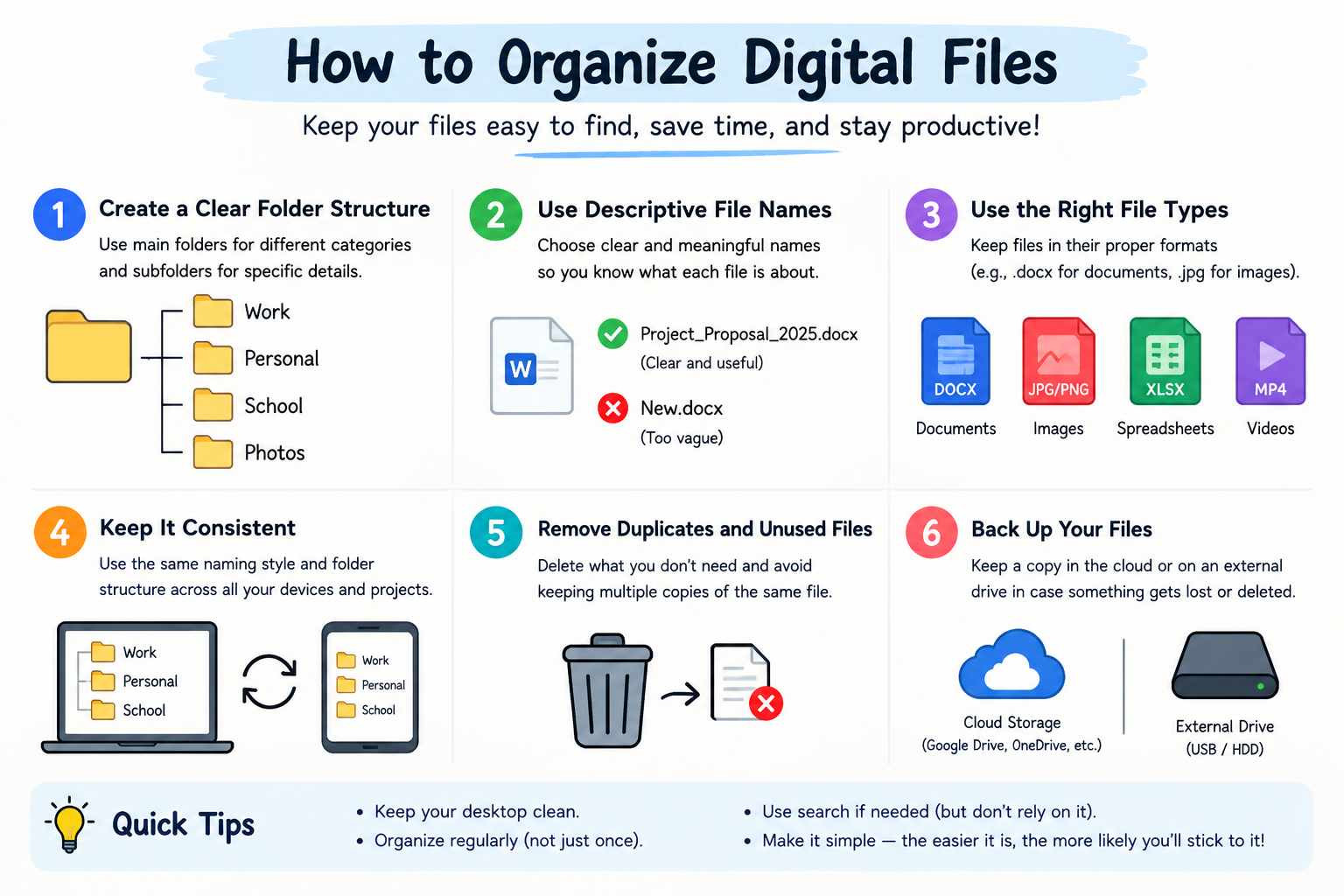
    Learning how to organize digital files can make your computer, phone, and cloud storage much easier to manage. When files are scattered across the desktop, Downloads folder, external drives, and cloud services, finding an important document can become frustrating. A simple and consistent system can keep your files organized and make everyday work more efficient.

    Why Is It Important to Organize Digital Files?

    Organizing digital files helps you find documents, images, videos, and other important information quickly. It can also reduce duplicate files, prevent unnecessary clutter, and make backups easier.

    A good digital organization system does not need to be complicated. The goal is to create a structure that makes sense to you and is easy to maintain over time.

    1. Create Main Folders

    The first step in learning how to organize digital files is creating a small number of main folders. These folders should represent the major areas of your digital life.

    For example:

    • Work
    • Personal
    • Projects
    • Documents
    • Photos
    • Videos
    • Finance
    • Downloads
    • Archive

    Avoid creating too many main folders. A simple structure makes files easier to locate.

    2. Create Subfolders for Projects

    Large categories can be divided into smaller subfolders. For example, a Work folder could contain different projects:

    Work
    ├── Client Projects
    ├── Reports
    ├── Marketing
    ├── Templates
    └── Completed Projects

    This approach keeps related files together and prevents one folder from becoming overloaded.

    3. Use Clear File Names

    File names are an important part of digital organization. Instead of using names such as document1.pdf or newfile.docx, use descriptive names that explain what the file contains.

    For example:

    2026-09-26-SEO-Report.pdf

    is much easier to understand than:

    report-final-new.pdf

    A useful naming format is:

    Date + Project + Description + Version

    For example:

    2026-09-26-Website-Report-v2.docx

    Consistent naming also makes searching for files much easier.

    4. Keep Your Desktop Clean

    The desktop should not become a permanent storage location. Although saving files there can be convenient, too many desktop files quickly create clutter.

    Move important files into their appropriate folders. You can keep a temporary folder such as Inbox for files that still need to be organized.

    For example:

    Desktop
    └── Inbox

    Review the Inbox regularly and move each file to its correct location.

    5. Organize Your Downloads Folder

    The Downloads folder often becomes one of the messiest areas on a computer. Downloaded images, documents, installers, PDFs, and other files can accumulate quickly.

    Check your Downloads folder regularly. Move useful files into permanent folders and delete files you no longer need.

    A simple weekly cleanup can prevent the folder from becoming overwhelming.

    6. Separate Current and Completed Projects

    If you work on multiple projects, separate active work from completed work.

    For example:

    Projects
    ├── Active
    │   ├── Project A
    │   └── Project B
    └── Archive
        ├── 2025
        └── 2026

    This makes it easier to focus on current projects while keeping older files available when needed.

    7. Use Version Numbers

    When editing an important document, avoid creating confusing names such as:

    final.docx
    final2.docx
    final-new.docx
    final-latest.docx

    Instead, use version numbers:

    Report-v1.docx
    Report-v2.docx
    Report-v3.docx

    This makes it easier to identify different versions and reduces confusion.

    8. Remove Duplicate and Unnecessary Files

    Over time, digital storage can fill with duplicate photos, old downloads, temporary files, and outdated documents.

    During a regular cleanup, look for:

    • Duplicate documents
    • Old downloads
    • Unused installers
    • Temporary files
    • Outdated project versions
    • Duplicate photos and videos

    Delete files you are certain you no longer need. If you are unsure, move them to an Archive folder before deleting them permanently.

    9. Create an Archive Folder

    An Archive folder is useful for files that you do not regularly need but still want to keep.

    For example:

    Archive
    ├── 2024
    ├── 2025
    └── 2026

    You can move completed projects and older documents into the appropriate year. This keeps your active folders clean without forcing you to delete potentially useful information.

    10. Back Up Important Digital Files

    File organization should always be combined with backups. A well-organized computer can still lose important information because of hardware failure, accidental deletion, or other problems.

    Keep copies of important files in a separate backup location, such as an external drive or reliable cloud storage.

    Important files may include:

    • Personal documents
    • Financial records
    • Work projects
    • Family photos
    • Videos
    • Important certificates
    • Business files

    Regular backups provide an additional layer of protection.

    11. Use the Same System Everywhere

    If you use multiple devices, try to follow the same organization system on each one.

    For example, you might use:

    Documents
    Photos
    Projects
    Work
    Personal
    Archive

    on your computer and use similar categories in your cloud storage.

    Consistency makes it easier to locate files regardless of which device you are using.

    12. Schedule Regular Digital Cleanup

    Knowing how to organize digital files is useful, but maintaining the system is even more important.

    Set aside a few minutes every week or month to:

    • Clean the Desktop
    • Review Downloads
    • Delete unnecessary files
    • Rename unclear files
    • Archive completed projects
    • Remove duplicates
    • Check backups

    Small, regular cleanups are much easier than trying to organize thousands of files at once.

    Final Thoughts

    Learning how to organize digital files does not require complicated software or a huge folder structure. Start with a few logical folders, use clear file names, separate active projects from archived files, and regularly remove unnecessary clutter.

    The most important thing is consistency. Once you create a simple system and follow it regularly, finding files becomes faster and your digital workspace stays clean and manageable.

  • Naruto Strongest Abilities: 10 Most Powerful Powers Explained

    Naruto Strongest Abilities: 10 Most Powerful Powers Explained

    Naruto Uzumaki is one of the most powerful shinobi in the Naruto and Boruto universe. Throughout his journey, he develops from a young ninja who struggles to control his chakra into a warrior capable of fighting some of the strongest characters in the series.

    His greatest strength is not based on one technique alone. Naruto combines enormous chakra reserves, Sage Mode, Kurama’s power, Six Paths abilities, Shadow Clones, and several powerful Rasengan variations. Among all of his abilities, Baryon Mode stands out as one of his most extreme transformations because it gives him an enormous temporary power boost while consuming life force.

    Here are some of Naruto’s strongest abilities explained.

    1. Baryon Mode

    Baryon Mode is one of Naruto’s most powerful abilities and was introduced during his battle against Isshiki Otsutsuki.

    Instead of simply combining Naruto’s chakra with Kurama’s chakra, Baryon Mode uses a fusion process that produces an enormous amount of energy. The transformation dramatically increases Naruto’s physical abilities and allows him to fight Isshiki at an extraordinary level.

    The ability has a major drawback. Baryon Mode consumes life force while it is active. Physical contact with the user also affects the opponent’s remaining lifespan, making every successful hit extremely dangerous for the enemy.

    This ability ultimately played a crucial role in Naruto’s fight against Isshiki.

    2. Six Paths Sage Mode

    Six Paths Sage Mode is another major power-up Naruto receives during the Fourth Shinobi World War.

    After receiving power from Hagoromo Otsutsuki, Naruto gains abilities far beyond ordinary Sage Mode. His physical capabilities, chakra and combat abilities increase dramatically, allowing him to fight enemies such as Madara and Kaguya.

    Naruto’s Six Paths power also allows him to use extremely powerful techniques enhanced with Six Paths chakra. The official Naruto site describes Naruto and Sasuke’s Six Paths-enhanced techniques as powers that went beyond the abilities of normal shinobi.

    3. Kurama Chakra Mode

    Kurama is the Nine-Tails sealed inside Naruto, and their relationship eventually develops from conflict into cooperation.

    Once Naruto learns to work together with Kurama, he gains access to enormous amounts of chakra. This allows him to create powerful chakra forms, increase his speed and strength, and protect other shinobi with Kurama’s chakra.

    Kurama is described officially as a tailed beast possessing immeasurable chakra.

    This power becomes one of the foundations for many of Naruto’s strongest techniques.

    4. Rasenshuriken

    The Rasenshuriken is one of Naruto’s signature offensive techniques.

    It is an advanced evolution of the Rasengan that incorporates Wind Release. Naruto’s training allows him to transform the Rasengan into a much more destructive technique.

    During the Pain arc, Sage Mode helped Naruto overcome the limitations involved in using his powerful Wind Style: Rasen Shuriken.

    Later in the series, Naruto develops even more powerful versions by combining Rasenshuriken with different chakra types and Six Paths abilities.

    5. Tailed Beast Rasenshuriken

    Naruto’s ability to combine Rasenshuriken with tailed-beast chakra takes his offensive power to another level.

    After gaining access to the chakra of multiple tailed beasts, Naruto can create attacks incorporating their different chakra natures. These techniques allow him to launch enormous attacks capable of damaging extremely powerful opponents.

    This combination of Rasenshuriken and tailed-beast chakra is particularly important during the final battles of the Fourth Shinobi World War.

    6. Six Paths: Ultra-Big Ball Rasenshuriken

    The Ultra-Big Ball Rasenshuriken represents the extreme scale of Naruto’s Rasengan-based techniques.

    By combining his enormous chakra reserves, Kurama’s power and Six Paths abilities, Naruto can create gigantic Rasenshuriken with tremendous destructive potential.

    His Six Paths-enhanced techniques were powerful enough to participate in the battle against Kaguya, one of the most dangerous enemies faced by Team 7.

    7. Sage Mode

    Before obtaining his Six Paths powers, Naruto already became extremely dangerous after mastering Sage Mode.

    Sage Mode allows Naruto to gather natural energy and combine it with his own chakra. This dramatically improves his physical abilities and enhances his ninjutsu.

    Naruto’s Sage Mode was first demonstrated prominently during his battle against Pain. He used enhanced sensory abilities, Frog Kumite and powerful Rasengan techniques to fight the Six Paths of Pain.

    Sage Mode remains one of the most important stages in Naruto’s development as a shinobi.

    8. Multiple Shadow Clone Technique

    The Multiple Shadow Clone Technique may not look as powerful as Baryon Mode, but it is one of Naruto’s most useful abilities.

    Naruto’s enormous chakra reserves allow him to create large numbers of clones. These clones can attack enemies, gather information, practice techniques and coordinate complex strategies.

    The technique becomes especially dangerous when Naruto combines hundreds of clones with Rasengan, Sage Mode or tailed-beast chakra.

    9. Massive Chakra Reserves

    Naruto’s enormous chakra supply is itself one of his greatest advantages.

    Because of his Uzumaki heritage and connection with Kurama, Naruto possesses extraordinary stamina and chakra reserves. This allows him to perform techniques repeatedly that would exhaust most shinobi.

    His chakra reserves also make his Shadow Clone training method particularly effective. Naruto can divide his chakra among clones and use them to accelerate his learning process.

    10. Six Paths Enhanced Combat

    Naruto’s Six Paths power isn’t limited to a single technique.

    It enhances his overall combat capabilities and allows him to use abilities that ordinary shinobi cannot access. During the final stages of the Fourth Shinobi World War, Naruto uses these powers against Madara and later Kaguya.

    The official Naruto anniversary material confirms that Naruto gained new abilities through the power inherited from the Sage of Six Paths and subsequently fought alongside Sasuke against Madara.

    Final Thoughts

    Naruto’s strongest abilities come from years of training, his relationship with Kurama and the powers he receives during the Fourth Shinobi World War. Sage Mode, Kurama Chakra Mode, Six Paths Sage Mode and his various Rasenshuriken techniques all represent important stages in his development.

    However, Baryon Mode is unique because it works differently from Naruto’s other transformations. It fuses Naruto and Kurama’s chakra to generate tremendous energy, but the transformation consumes life force and can only be maintained for a limited period.

    From the early Rasengan to Six Paths techniques and finally Baryon Mode, Naruto’s abilities demonstrate how dramatically his power evolves throughout the story.