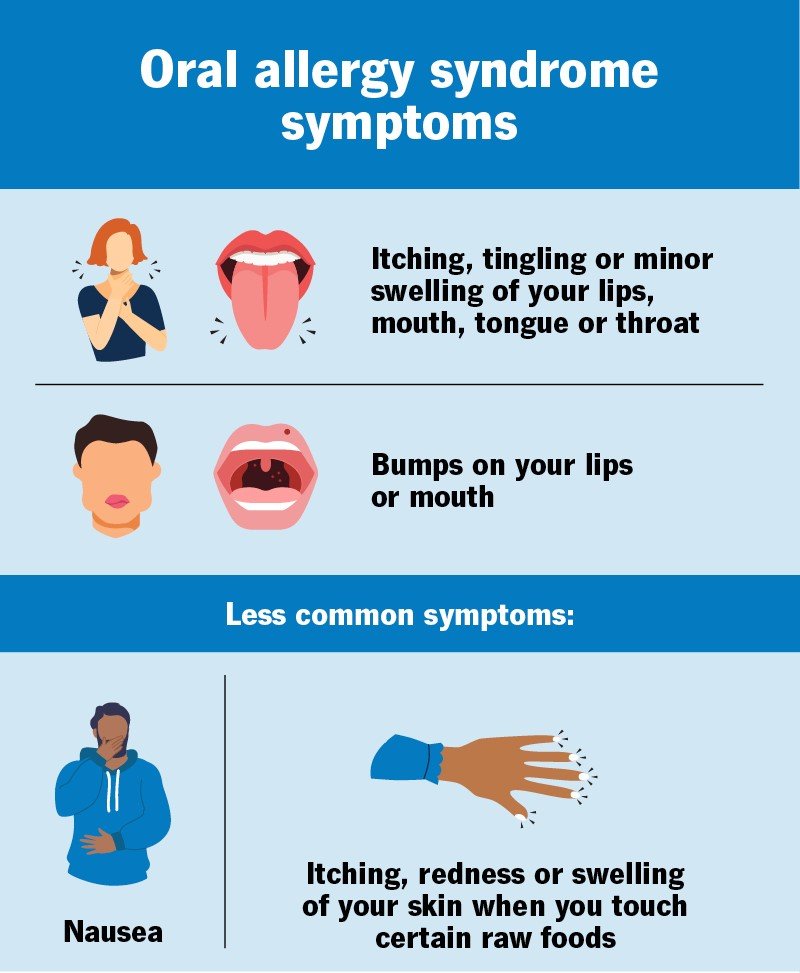
Oral allergy syndrome symptoms are usually mild allergic reactions that affect the mouth and throat after eating certain raw fruits, vegetables, nuts, or other plant foods. The condition is also known as pollen-food allergy syndrome (PFAS) because it commonly occurs in people who are allergic to certain types of pollen. Typical symptoms include itching, tingling, or mild swelling of the lips, tongue, mouth, or throat.
Although oral allergy syndrome is generally mild, understanding its symptoms and triggers is important because reactions can occasionally be more serious. If symptoms repeatedly appear after eating particular foods, an allergist or healthcare professional can help determine whether oral allergy syndrome or another type of food allergy is responsible.
What Is Oral Allergy Syndrome?
Oral allergy syndrome is a localized allergic reaction caused by cross-reactivity between proteins found in certain pollens and proteins found in particular foods.
For example, someone with a pollen allergy may experience an itchy mouth after eating a raw apple. The immune system recognizes similarities between proteins in the pollen and proteins in the food. This can produce an allergic reaction shortly after the food is eaten.
OAS most commonly affects the lips, mouth, tongue, roof of the mouth, and throat. Reactions are generally brief and mild, although more significant reactions can occur in rare cases.
Common Oral Allergy Syndrome Symptoms
The most recognizable oral allergy syndrome symptoms usually begin shortly after eating a trigger food.
Common symptoms include:
- Itching of the lips
- Tingling of the lips or mouth
- Itching inside the mouth
- Tingling or itching of the tongue
- Itching of the roof of the mouth
- Itchy or irritated throat
- Mild swelling of the lips
- Mild swelling of the tongue
- Minor swelling inside the mouth
- Small bumps or irritation around the lips or mouth
These symptoms generally remain concentrated around the mouth and throat. The American Academy of Allergy, Asthma & Immunology describes OAS as a localized IgE-mediated reaction that typically produces itching or tingling involving the lips, tongue, roof of the mouth, and throat.
When Do Oral Allergy Syndrome Symptoms Appear?
OAS symptoms usually develop soon after eating the triggering food. Because the reaction is related to direct contact with food proteins, a person may notice itching or tingling while eating or shortly afterward.
For many people, symptoms disappear relatively quickly without treatment. Cleveland Clinic notes that OAS reactions are generally minor and often resolve quickly.
Keeping track of when symptoms occur can be useful. If the same reaction repeatedly happens after eating a particular raw fruit or vegetable, discussing the pattern with a healthcare professional may help identify the trigger.
Why Does Oral Allergy Syndrome Happen?
The main reason OAS occurs is cross-reactivity.
People with seasonal pollen allergies develop immune responses to specific pollen proteins. Some raw foods contain proteins that are structurally similar to those pollen proteins. The immune system can mistake the food proteins for the pollen allergens and trigger an allergic response.
This explains why a person may tolerate a particular food in one form but experience symptoms when eating it raw.
For example, some people with pollen-food syndrome may react to a fresh apple but tolerate cooked apple products. Heating can change the proteins responsible for the reaction.
Common Food Triggers
Oral allergy syndrome can involve many different foods, and triggers vary from person to person.
Commonly associated foods include:
- Apples
- Peaches
- Cherries
- Pears
- Plums
- Apricots
- Kiwi
- Bananas
- Melons
- Carrots
- Celery
- Tomatoes
- Cucumbers
- Zucchini
- Oranges
- Almonds
- Hazelnuts
- Peanuts
- Soybeans
Not everyone with a particular pollen allergy will react to every food associated with that pollen. Individual reactions can vary considerably.
Pollen and Food Connections
Certain pollen allergies are associated with particular groups of foods.
Birch Pollen
Birch pollen is associated with reactions to foods such as apples, apricots, cherries, peaches, pears, plums, almonds, hazelnuts, carrots, and celery.
Grass Pollen
People with grass pollen allergies may experience reactions to foods such as melons, kiwi, oranges, tomatoes, and watermelon.
Ragweed Pollen
Ragweed pollen can be associated with reactions to bananas, cantaloupe, cucumber, honeydew melon, watermelon, and zucchini.
These associations are not absolute. A person can have a pollen allergy without reacting to the related foods, and food reactions can vary between individuals.
Why Raw Foods Often Cause More Problems
One important feature of oral allergy syndrome is that symptoms often occur with raw foods.
The proteins involved in pollen-food cross-reactivity can be sensitive to heat. Cooking, baking, canning, or other processing methods may alter these proteins enough that some people no longer experience symptoms.
For example, someone who develops mouth itching after eating a raw peach may be able to tolerate a cooked or canned form.
However, this should not be assumed to be safe for everyone. Some food allergies involve proteins that remain allergenic after cooking. Therefore, anyone who has experienced a significant allergic reaction should discuss food preparation and avoidance with an allergy specialist rather than testing foods independently.
Other Possible Symptoms
Although oral symptoms are the defining feature, OAS can sometimes cause symptoms outside the mouth.
Possible additional symptoms include:
- Nausea
- Itching of the skin
- Redness of the skin
- Swelling of the skin after touching a raw trigger food
These symptoms are less typical than the mouth and throat symptoms associated with OAS.
If a reaction affects several areas of the body, especially the skin and respiratory system, it is important to consider whether the reaction could represent a more significant food allergy rather than simple localized OAS.
Oral Allergy Syndrome vs. Food Allergy
OAS and conventional food allergies can sometimes look similar, but there are important differences.
OAS generally produces localized symptoms such as mouth itching, tingling, and mild swelling after eating certain raw plant foods. Traditional food allergies can produce symptoms involving multiple body systems, including hives, vomiting, wheezing, breathing problems, and potentially anaphylaxis.
This distinction is important because not every reaction after eating a food should automatically be considered OAS.
A healthcare professional may consider the person’s pollen allergy history, the food involved, the form of the food, timing of symptoms, and previous reactions when determining the likely cause.
How Is Oral Allergy Syndrome Diagnosed?
An allergist or other healthcare professional can evaluate suspected OAS.
Diagnosis often begins with a detailed medical history. The healthcare professional may ask:
- Which foods cause symptoms?
- Were the foods raw or cooked?
- How quickly did symptoms begin?
- What symptoms occurred?
- Does the person have seasonal allergies?
- Has the reaction happened more than once?
- Have there ever been breathing problems, widespread hives, dizziness, or other serious symptoms?
Allergy testing may also be used when appropriate. Depending on the situation, testing can include skin testing, blood testing for specific IgE antibodies, or supervised food challenge testing.
Accurate diagnosis matters because OAS can sometimes be confused with other food allergies or food-related conditions.
Managing Oral Allergy Syndrome Symptoms
The most common approach to managing OAS is avoiding foods that consistently cause symptoms, particularly in their raw form.
Healthcare professionals may recommend avoiding specific trigger foods according to the severity and pattern of the person’s reactions.
For some people, cooking or otherwise processing the food can reduce the reaction because heat changes the relevant proteins. However, whether a cooked version is safe depends on the specific allergy and individual circumstances.
People should also be aware that reactions may become more noticeable during periods when seasonal pollen allergies are active. Cleveland Clinic notes that reactions to trigger foods may be stronger during periods when seasonal allergies are worse.
Can Antihistamines Help?
Some people may use antihistamines for mild allergy symptoms, but treatment should be based on individual medical advice.
If a person has experienced more serious reactions, an allergist may recommend carrying an epinephrine auto-injector. Epinephrine is the first-line treatment for anaphylaxis, not a substitute for emergency medical care.
Anyone who has been prescribed an epinephrine auto-injector should follow their healthcare professional’s instructions about when and how to use it.
When Should You Seek Emergency Help?
Most OAS reactions are mild, but serious allergic reactions are possible.
Seek emergency medical attention if eating a food causes symptoms such as:
- Difficulty breathing
- Wheezing
- Severe throat swelling
- Difficulty swallowing
- Significant swelling of the tongue or face
- Severe dizziness or weakness
- Fainting
- Widespread hives accompanied by other serious symptoms
Anaphylaxis can develop quickly and requires immediate treatment. AAAAI recommends emergency medical care when symptoms indicate a severe allergic reaction.
If you have an epinephrine auto-injector and your healthcare professional has instructed you to use it for a severe allergic reaction, use it according to those instructions and seek emergency medical care.
Can Oral Allergy Syndrome Go Away?
OAS can change over time. Some people continue experiencing reactions to particular foods, while others may find that symptoms become less noticeable.
There is currently no specific cure for OAS, but identifying trigger foods and managing underlying pollen allergies can help reduce problems.
Because reactions vary, people should avoid assuming that a food is permanently safe or unsafe based solely on another person’s experience.
Frequently Asked Questions
Is oral allergy syndrome dangerous?
OAS is usually mild and limited to the mouth and throat. Serious reactions are uncommon, but anaphylaxis can occur rarely.
What are the first signs of oral allergy syndrome?
The first signs are commonly itching, tingling, or mild swelling of the lips, tongue, mouth, or throat shortly after eating a trigger food.
Can you eat cooked foods with oral allergy syndrome?
Some people with OAS can tolerate cooked, baked, canned, or processed versions of foods that cause symptoms when eaten raw because heating can alter the responsible proteins. However, this does not apply to every food allergy.
Does OAS mean you have a food allergy?
OAS is itself a form of localized IgE-mediated food allergy associated with cross-reactivity between pollen and food proteins. However, a healthcare professional should determine whether a particular reaction is OAS or another type of food allergy.
Should you see an allergist for oral allergy syndrome?
If you repeatedly develop mouth or throat symptoms after eating particular foods, seeing an allergist can help identify the trigger and determine whether there is a risk of a more serious allergic reaction.
Final Thoughts
Oral allergy syndrome symptoms most commonly include itching, tingling, and mild swelling of the lips, tongue, mouth, or throat after eating certain raw plant foods. The condition is strongly associated with pollen allergies and occurs because the immune system can recognize similar proteins in pollen and certain foods.
Most reactions are mild and short-lived, but repeated food reactions should not be ignored. Identifying trigger foods, understanding the difference between raw and cooked forms, and discussing recurring symptoms with an allergist can help with safe management. Severe symptoms such as difficulty breathing, significant throat swelling, dizziness, or fainting require immediate emergency medical attention.