The internet has become one of the most important technologies in modern life. People use it to communicate, study, work, shop, watch entertainment, access news, manage finances, and connect with communities around the world. What began as a relatively limited communication network has developed into a global digital environment used by billions of people every day.
What Is Internet Use?
Internet use refers to the different ways people access and interact with online services, websites, applications, platforms, and digital content. Users can connect through smartphones, computers, tablets, smart TVs, and other connected devices.
Internet activities can range from simple web searches and email communication to online banking, video streaming, social networking, gaming, remote work, e-learning, and online shopping.
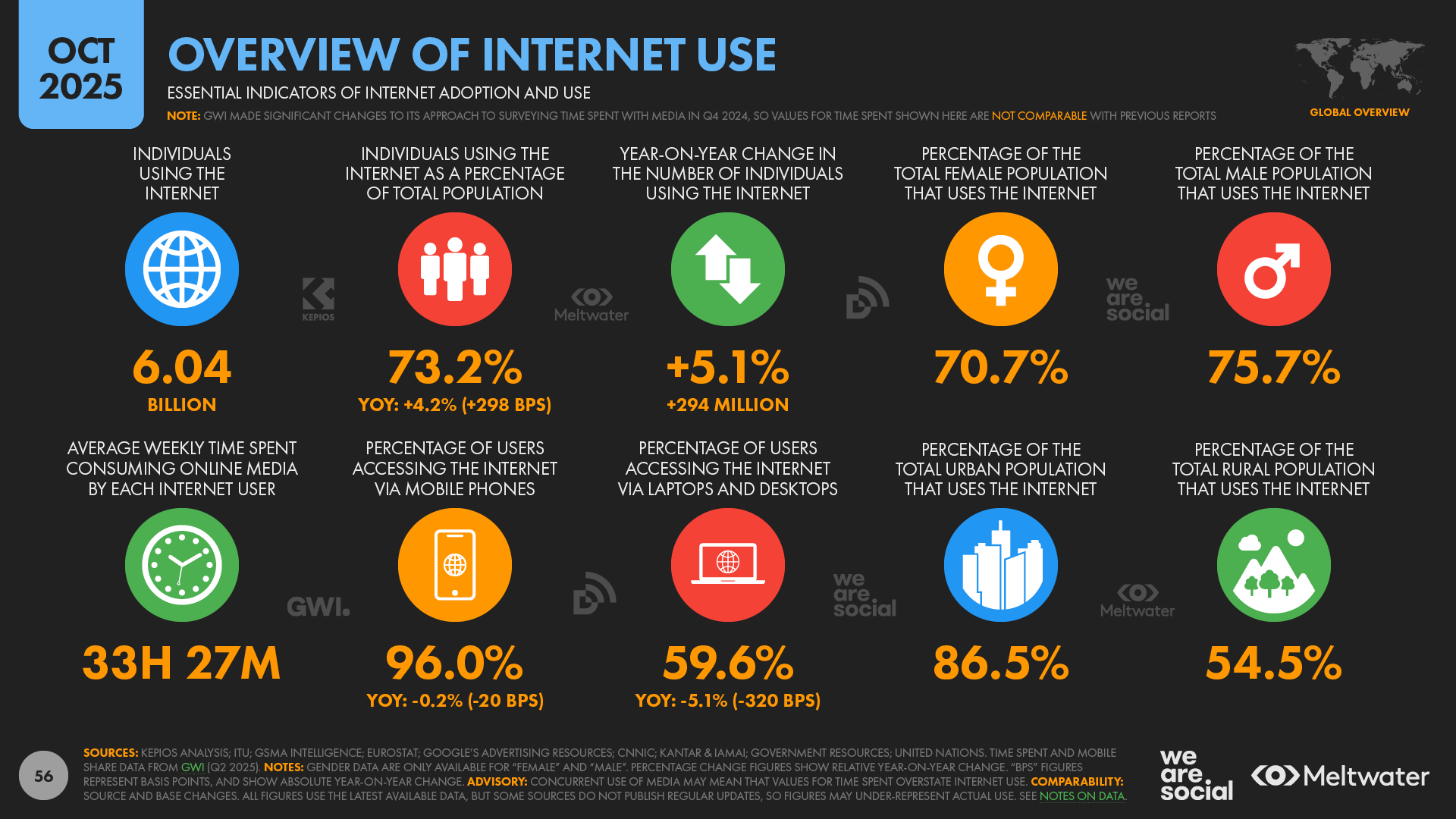
The scale of internet use has increased dramatically over the past two decades. According to the International Telecommunication Union (ITU), approximately 6 billion people, or 74% of the world’s population, were using the internet in 2025. However, around 2.2 billion people remained offline.
How People Use the Internet
People use the internet for many different purposes depending on their age, location, occupation, and personal interests. Some of the most common forms of internet use include communication, entertainment, education, work, shopping, and information gathering.
1. Communication
Communication is one of the most common uses of the internet. People can communicate almost instantly with friends, family members, colleagues, and organizations regardless of geographical distance.
Email, messaging applications, video calls, social networking platforms, and online communities allow people to exchange text, images, videos, documents, and other information.
Businesses also depend heavily on online communication. Companies use email, video meetings, customer-support systems, and collaboration platforms to communicate with employees and customers.
2. Social Media
Social media has become an important part of internet use. Platforms allow people to create profiles, share posts, upload videos, follow creators, participate in communities, and interact with other users.
Social media is also widely used by businesses and organizations for marketing and customer engagement. It allows brands to publish content, communicate with customers, and promote products and services.
The scale of social media is significant. DataReportal reported that global social media user identities reached approximately 5.24 billion at the beginning of 2025, although these identities do not necessarily represent unique individuals.
3. Education and Learning
The internet has changed how people learn and access educational resources. Students can use websites, digital libraries, online courses, educational videos, research databases, and virtual classrooms.
Teachers and educational institutions can also use online platforms to distribute assignments, conduct classes, share study materials, and communicate with students.
Online learning can be especially useful for people who do not have easy access to traditional educational institutions. However, reliable internet access and digital skills are necessary to benefit from these resources.
4. Work and Business
Internet use has become essential for many modern workplaces. Employees can communicate with colleagues, attend virtual meetings, manage projects, store files, conduct research, and work with customers online.
Remote and hybrid work have also increased the importance of internet connectivity. Freelancers, online businesses, digital marketers, software developers, designers, writers, and many other professionals can provide services to clients in different countries.
Businesses also use the internet for websites, advertising, e-commerce, customer service, data management, and digital marketing.
5. Online Shopping
E-commerce allows consumers to discover products, compare prices, read reviews, place orders, and make payments without visiting a physical store.
People can purchase clothing, electronics, groceries, entertainment services, software, and many other products online. Businesses benefit from e-commerce because they can reach customers beyond their local markets.
The growth of online shopping has also created new opportunities for small businesses and independent sellers.
6. Entertainment
Entertainment is another major area of internet use. People watch videos, listen to music, stream movies and television programs, play online games, read digital publications, and follow creators.
Video-sharing and streaming platforms have changed how audiences consume entertainment. Instead of depending entirely on traditional television or physical media, users can select content whenever they want.
Online gaming is also a major part of digital entertainment. Players can compete or cooperate with others through internet-connected games.
7. News and Information
The internet provides rapid access to news and information. People can read newspapers and magazines online, follow breaking news, search for explanations, and access information from government agencies, educational institutions, and other organizations.
Search engines make it possible to find information on almost any subject within seconds. However, the large amount of online information also makes it important for users to evaluate sources carefully and distinguish reliable information from misleading or inaccurate content.
Mobile Internet Use
Smartphones have played a major role in expanding internet access. Users can browse websites, communicate, watch videos, shop, use maps, access banking services, and perform many other activities without a traditional computer.
Mobile broadband has made internet access more convenient because people can connect while traveling, working, studying, or spending time away from home.
According to the ITU, more than 96% of the world’s population was covered by a mobile broadband network in 2025, although differences in network quality and affordability remain.
Global Growth of Internet Use
Internet adoption has increased considerably over time. ITU data show that internet use rose from approximately 40% of the world’s population in 2015 to 74% in 2025. The number of people online increased to about 6 billion during this period.
This growth demonstrates how important digital connectivity has become in everyday life. However, the growth rate is not the same everywhere.
High-income countries had an internet-use rate of about 94% in 2025, while only about 23% of people in low-income countries were online.
The Urban and Rural Internet Divide
Location remains an important factor in internet access. People living in cities generally have better access to digital infrastructure than people living in rural areas.
In 2025, approximately 85% of people living in urban areas used the internet, compared with 58% of people living in rural areas globally.
This difference can affect access to education, employment, healthcare information, online services, and economic opportunities.
Internet Use Among Young People
Young people are generally highly connected to the internet. The ITU reported that 82% of people aged 15–24 used the internet in 2025, compared with 72% of the rest of the population.
Young users commonly use the internet for education, entertainment, communication, social media, gaming, and creative activities. Their online habits are also influencing how businesses and digital platforms develop new products and services.
Benefits of Internet Use
Internet access can provide many benefits. It allows people to communicate quickly, access educational materials, find employment opportunities, conduct business, obtain information, and participate in digital communities.
Challenges of Internet Use
Despite its benefits, internet use also presents challenges. Privacy, cybersecurity, misinformation, online scams, excessive screen time, and exposure to harmful content are among the issues users may encounter.
Another major challenge is unequal access. The ITU reports that affordability, digital skills, infrastructure, and location continue to affect who can meaningfully use the internet.
Digital literacy is therefore important. Users need to understand how to protect their accounts, recognize suspicious content, evaluate online information, and use digital services responsibly.
The Future of Internet Use
Internet use is expected to continue changing as technologies such as artificial intelligence, cloud computing, faster mobile networks, connected devices, and digital services develop.
The focus is also shifting from simply getting people online toward providing reliable, affordable, useful, and safe connectivity. The ITU notes that internet access alone does not guarantee equal benefits because quality, affordability, and digital skills influence how people can use online services.
Conclusion
The overview of internet use shows how deeply the internet has become integrated into modern society. People use it for communication, education, work, shopping, entertainment, social networking, and accessing information.
With around 6 billion people online in 2025, internet connectivity has reached most of the world’s population. However, billions of people remain offline, and significant differences in affordability, infrastructure, location, and digital skills continue to exist.
As internet technology continues to develop, improving access and helping people use digital services safely and effectively will remain important for individuals, businesses, and communities worldwide.
Leave a Reply