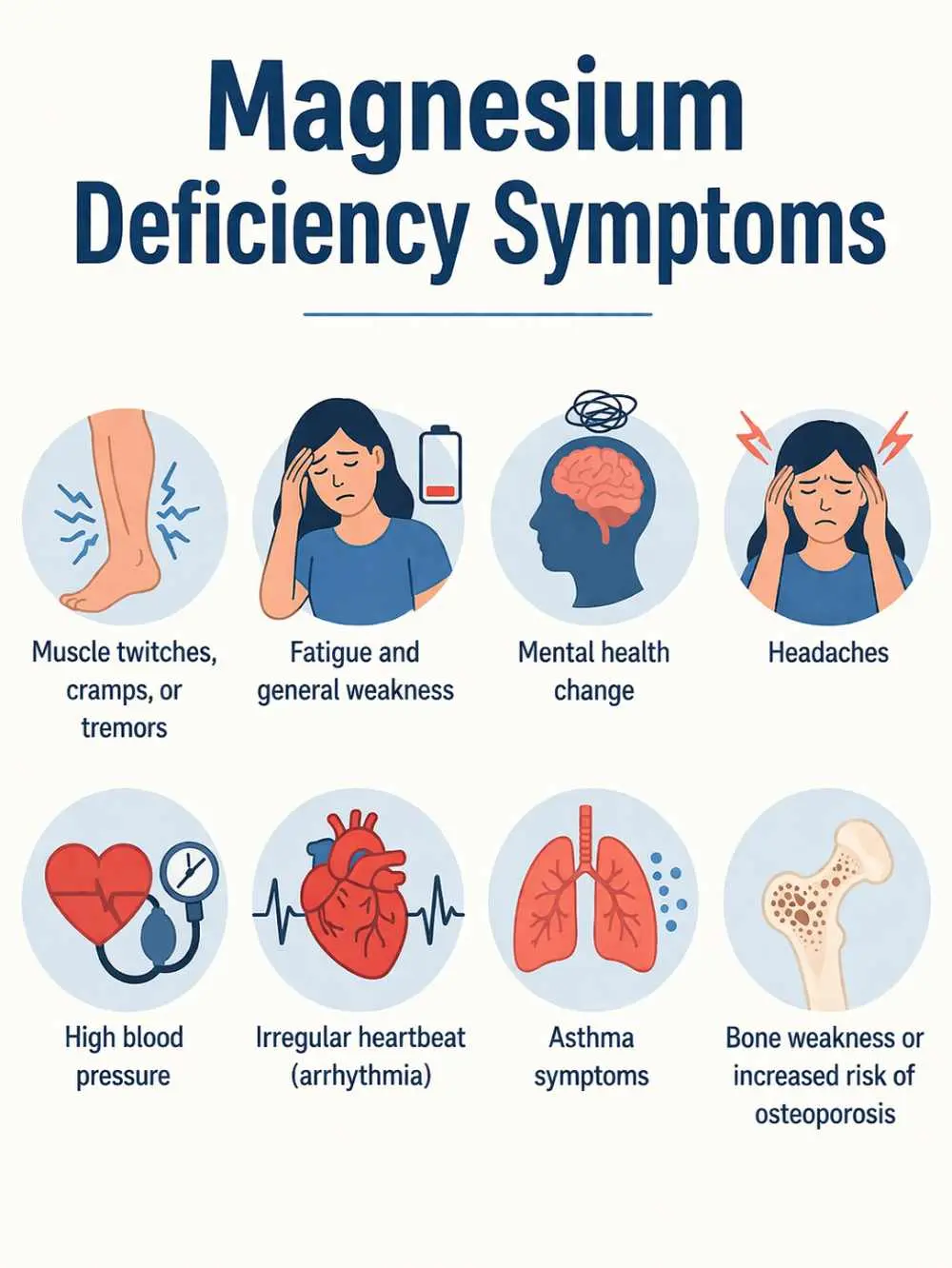
Magnesium deficiency symptoms can range from mild muscle cramps and fatigue to more serious problems such as abnormal heart rhythms and seizures. Magnesium is an essential mineral involved in hundreds of processes in the body, including muscle and nerve function, blood glucose regulation, and normal heart rhythm.
A mild deficiency may not always cause noticeable symptoms. However, as magnesium levels become lower, different physical and neurological symptoms can appear.
What Is Magnesium Deficiency?
Magnesium deficiency, medically known as hypomagnesemia, occurs when the body has an abnormally low level of magnesium. The body obtains magnesium primarily through food, while the kidneys help regulate how much magnesium is retained or removed.
True magnesium deficiency is relatively uncommon in otherwise healthy people because the kidneys can limit magnesium loss when intake is low. However, certain medical conditions, digestive problems, medications, and prolonged nutrient losses can increase the risk.
Common Magnesium Deficiency Symptoms
Recognizing magnesium deficiency symptoms can be difficult because many of them can also occur with other health conditions.
1. Muscle Cramps and Spasms
Muscle cramps, twitching, and spasms are among the symptoms commonly associated with low magnesium. Magnesium plays an important role in normal muscle contraction and relaxation.
Some people may notice involuntary muscle twitching or increased muscle tightness when magnesium levels become significantly low.
2. Fatigue and Weakness
Low magnesium can be associated with tiredness, weakness, and reduced physical energy. Because magnesium participates in energy production and normal cellular function, inadequate levels may affect how the body uses energy.
However, fatigue has many possible causes, including poor sleep, stress, anemia, infections, and other nutritional deficiencies.
3. Nausea and Loss of Appetite
Magnesium deficiency may cause gastrointestinal symptoms such as nausea and reduced appetite. In more significant deficiency, vomiting can also occur.
These symptoms can create a cycle because prolonged vomiting or poor food intake may further reduce magnesium intake.
4. Numbness and Tingling
Low magnesium levels can affect normal nerve and muscle function. In some cases, people may experience numbness, tingling, or unusual sensations.
Because these symptoms can also indicate neurological or other medical problems, persistent or unexplained tingling should be evaluated rather than automatically attributed to magnesium deficiency.
5. Muscle Weakness
Magnesium is necessary for normal muscle and nerve activity. Significant deficiency may therefore contribute to muscle weakness.
Severe weakness, particularly when it develops suddenly, requires medical attention because it can have causes unrelated to magnesium.
Severe Magnesium Deficiency Symptoms
When magnesium deficiency becomes severe, the symptoms can become more serious.
Possible severe magnesium deficiency symptoms include:
- Abnormal heart rhythms
- Severe muscle spasms
- Tremors
- Seizures
- Significant weakness
- Changes in mental status
- Low blood calcium levels
- Low blood potassium levels
Severe hypomagnesemia can sometimes occur alongside other electrolyte abnormalities. These complications may require medical treatment and monitoring.
What Causes Magnesium Deficiency?
Several factors can contribute to low magnesium levels.
Poor Magnesium Intake
A diet consistently low in magnesium-rich foods may increase the risk, particularly when combined with other factors that increase magnesium loss.
Good dietary sources include nuts, seeds, legumes, whole grains, leafy green vegetables, and some fortified foods.
Gastrointestinal Problems
Conditions that interfere with nutrient absorption can contribute to magnesium deficiency. Long-lasting diarrhea and other gastrointestinal problems can also cause the body to lose magnesium.
Certain Medications
Some medications can increase magnesium loss or affect magnesium absorption. Examples include certain diuretics and prolonged use of some acid-reducing medications.
Anyone taking medication regularly should speak with a healthcare professional before changing the medication or starting magnesium supplements.
Alcohol Use
Long-term excessive alcohol consumption can increase the risk of magnesium deficiency through reduced dietary intake, gastrointestinal problems, and increased urinary magnesium loss.
Diabetes and Other Medical Conditions
Some medical conditions can increase magnesium losses. For example, poorly controlled diabetes may cause increased urination, which can contribute to the loss of magnesium and other electrolytes.
Foods High in Magnesium
For most people, obtaining magnesium from a balanced diet is preferable to taking supplements without a specific reason.
Magnesium-rich foods include:
| Food | Magnesium source |
|---|---|
| Pumpkin seeds | Excellent source |
| Chia seeds | High in magnesium |
| Almonds | Good source |
| Spinach | Magnesium-rich leafy green |
| Black beans | Good source |
| Cashews | Good source |
| Whole grains | Useful dietary source |
| Peanut butter | Contains magnesium |
| Avocado | Provides magnesium |
| Dark chocolate | Contains magnesium |
Including a variety of these foods in a balanced diet can help support adequate magnesium intake.
How Is Magnesium Deficiency Diagnosed?
Symptoms alone cannot reliably confirm magnesium deficiency. A healthcare professional may consider a person’s symptoms, medical history, medications, diet, and other laboratory results.
A blood test can be used to measure serum magnesium. Depending on the situation, healthcare professionals may also check other electrolytes, kidney function, or related nutritional markers.
It is important to remember that a normal blood magnesium result does not always provide a complete picture of total magnesium stores in the body, so test results should be interpreted in context.
Should You Take Magnesium Supplements?
Magnesium supplements can be useful for people who have an identified deficiency or certain medical reasons for supplementation. However, taking high doses without guidance is not necessarily beneficial.
Too much supplemental magnesium can cause diarrhea, nausea, and abdominal cramping. Very high amounts can be dangerous, particularly in people with impaired kidney function.
The type and dose of magnesium supplement can also vary, so it is better to discuss supplementation with a healthcare professional when deficiency is suspected.
When Should You See a Doctor?
You should consider speaking with a healthcare professional if you have persistent muscle cramps, weakness, unexplained tremors, ongoing nausea, or other symptoms that concern you.
Seek urgent medical attention for serious symptoms such as seizures, severe weakness, fainting, or significant heart-rhythm symptoms.
These symptoms can have multiple causes, and treating the underlying problem is more important than assuming magnesium deficiency is responsible.
Final Thoughts
Magnesium deficiency symptoms can include fatigue, muscle cramps, weakness, nausea, muscle spasms, tremors, and tingling. Severe deficiency may lead to abnormal heart rhythms, seizures, and other electrolyte abnormalities.
A healthy diet containing magnesium-rich foods can help maintain adequate intake. If symptoms persist or deficiency is suspected, professional evaluation and appropriate testing can help determine whether low magnesium is actually the cause.
Leave a Reply