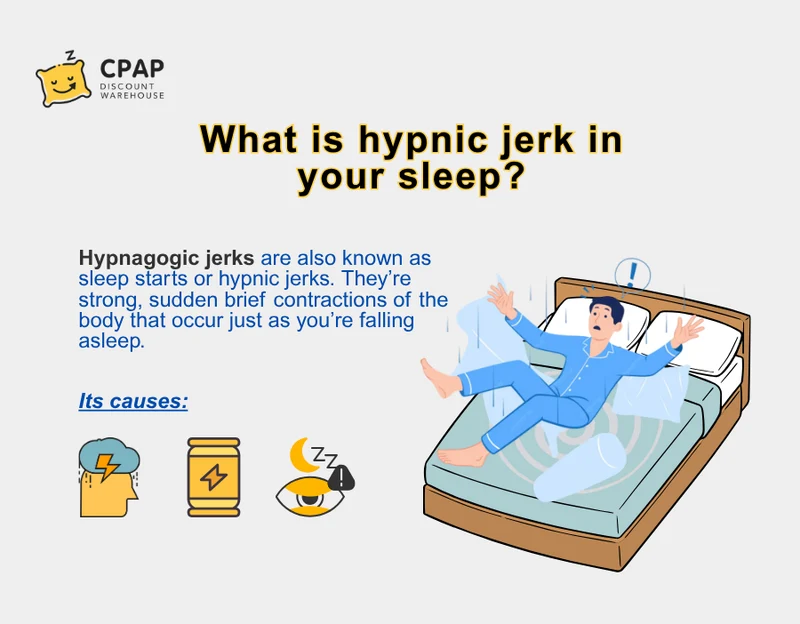
Have you ever been about to fall asleep when your body suddenly jerks, your leg kicks, or you feel as though you are falling? This sudden movement is commonly known as a hypnic jerk. Understanding the hypnic jerk causes can help explain why these unexpected movements happen and whether they are something to worry about.
Hypnic jerks are sudden, involuntary muscle movements that usually occur during the transition from wakefulness to sleep. They can affect one muscle, such as an arm or leg, or involve several parts of the body at once. Some people also experience a brief falling sensation or a startled feeling when the jerk occurs.
For most people, hypnic jerks are common and harmless. However, certain factors can make them happen more frequently, including sleep deprivation, stress, caffeine consumption, and physical exhaustion.
What Is a Hypnic Jerk?
A hypnic jerk, sometimes called a hypnagogic jerk or sleep start, is a brief involuntary muscle contraction that occurs as you fall asleep. It can happen when your body begins moving from wakefulness into the early stages of sleep.
The movement can be very small, such as a slight twitch in your finger, or strong enough to make your entire body jump. Some people describe the experience as feeling like they are falling from a height or suddenly losing their balance.
Hypnic jerks can happen without waking you completely. In other cases, the movement can be strong enough to bring you back into full wakefulness.
The exact biological mechanism behind hypnic jerks is not completely understood. Researchers believe they may involve temporary activity or misfiring within the nervous system during the transition into sleep.
Common Hypnic Jerk Causes
Several factors may increase the likelihood of experiencing hypnic jerks. The most commonly discussed causes and triggers involve sleep habits, stimulation of the nervous system, and difficulty relaxing before bedtime.
1. Lack of Sleep
One of the important hypnic jerk causes is sleep deprivation. When you regularly get less sleep than your body needs, your normal sleep cycle can become disrupted.
Sleep deprivation can make the transition between wakefulness and sleep less smooth. This may increase the likelihood of sudden muscle movements when you finally fall asleep.
A poor sleep schedule can also create a cycle in which tiredness makes hypnic jerks more noticeable, while repeated jerks make it harder to fall asleep.
Getting a consistent amount of sleep each night may therefore help reduce the frequency of these movements.
2. Stress and Anxiety
Stress is another commonly reported trigger.
When you are stressed, your mind may remain active even when you are physically tired. Racing thoughts can make it harder to relax and transition naturally into sleep.
Stress can also contribute to poor sleep quality and sleep deprivation, both of which may increase the likelihood of hypnic jerks.
Creating a relaxing bedtime routine may help. Reading, slow breathing, meditation, or simply reducing stimulating activities before bed can make the transition into sleep easier.
3. Caffeine
Caffeine is a stimulant that can affect the nervous system and interfere with sleep.
Coffee, energy drinks, tea, cola, and some other products contain caffeine. Consuming large amounts, particularly later in the day, can make it harder to fall asleep and may keep you in lighter stages of sleep.
Because caffeine can contribute to sleep disruption, it may also increase the likelihood of experiencing hypnic jerks in some people.
If you regularly experience hypnic jerks at night, paying attention to when you consume caffeine may be useful.
4. Physical Exhaustion
Being physically exhausted can also play a role.
After a demanding day, your body may become extremely tired while your nervous system remains stimulated. This combination can affect the transition into sleep.
Physical exhaustion is therefore considered another possible factor associated with more frequent hypnic jerks.
However, regular exercise is generally beneficial for sleep. The issue may be more related to excessive exertion or intense activity very close to bedtime rather than exercise itself.
5. Vigorous Exercise Before Bed
Exercise can improve sleep quality, but very intense exercise late at night may leave some people feeling more alert.
Sleep Foundation notes vigorous exercise at night as a possible factor associated with hypnic jerks. If you notice that jerks happen more often after late-night workouts, moving intense exercise earlier in the day may help.
Gentler activities such as walking or stretching may be more appropriate close to bedtime.
6. Stimulants and Nicotine
Stimulants such as nicotine can make it harder for the nervous system to wind down before sleep.
Nicotine can interfere with sleep quality, while other stimulant substances may also affect the normal sleep cycle. Cleveland Clinic also identifies stimulant drugs and alcohol as possible contributors to sleep disruption and movements associated with sleep transitions.
Reducing stimulant exposure, particularly near bedtime, can support better sleep.
Why Do Hypnic Jerks Feel Like Falling?
One of the most interesting features of a hypnic jerk is the sensation of falling.
Some people experience a sudden feeling that they are dropping, tripping, or losing their balance immediately before the body jerks. Researchers have proposed several explanations for this sensation.
One theory is that as your muscles relax during the transition into sleep, the brain may temporarily interpret the change as a movement or falling sensation. It may then produce a sudden muscle contraction as part of a startle-like response.
The exact explanation, however, remains uncertain.
Are Hypnic Jerks Normal?
For most people, occasional hypnic jerks are normal.
They can occur in otherwise healthy people and do not automatically indicate a neurological disease or serious health problem. Sleep Foundation describes hypnic jerks as common and generally harmless.
A person may experience them occasionally without any clear trigger. Others may notice them more often during periods of stress, fatigue, or increased caffeine consumption.
The experience can be startling, but a single jerk while falling asleep is usually not a reason for concern.
Hypnic Jerks vs. Other Sleep Movements
Not every movement during sleep is a hypnic jerk.
Several other conditions can involve involuntary movements. For example, periodic limb movements of sleep can cause repeated movements of the arms or legs during sleep, sometimes occurring every 20 to 40 seconds.
Restless legs syndrome is different as well. It commonly involves uncomfortable sensations in the legs and an urge to move them, particularly during periods of rest.
Myoclonus is a broader medical term describing sudden, brief muscle movements. Hypnic jerks are one type of myoclonus that occurs during the transition into sleep.
Understanding these differences is important because frequent or unusual movements may have causes other than ordinary hypnic jerks.
How to Reduce Hypnic Jerks
There is no guaranteed way to prevent every hypnic jerk, but improving sleep habits may reduce common triggers.
Maintain a Consistent Sleep Schedule
Try to go to bed and wake up at approximately the same time each day. A regular schedule can support a more stable sleep-wake cycle.
Get Enough Sleep
Avoid regularly staying awake late into the night or cutting your sleep short. Sleep deprivation is associated with an increased likelihood of hypnic jerks.
Limit Caffeine Later in the Day
If caffeine appears to make your nighttime jerks worse, consider reducing your intake or avoiding caffeinated drinks later in the day.
Reduce Stress Before Bed
Give yourself time to wind down before sleeping. Deep breathing, meditation, reading, gentle stretching, and other relaxing activities may help prepare your body and mind for sleep.
Avoid Intense Late-Night Exercise
If vigorous workouts close to bedtime appear to trigger sleep problems or jerks, consider moving them earlier in the day.
Create a Comfortable Sleep Environment
A dark, quiet, and comfortable bedroom can make it easier to fall asleep and maintain good sleep quality.
When Should You Talk to a Doctor?
Occasional hypnic jerks are generally not considered dangerous. However, you should consider speaking with a healthcare professional if the movements become very frequent, repeatedly prevent you from falling asleep, or significantly disrupt your sleep.
Cleveland Clinic recommends seeking medical advice when involuntary movements frequently keep you awake, cause significant concern about going to sleep, or become increasingly frequent.
Medical evaluation can also be useful if movements happen regularly while you are fully awake or are accompanied by other unusual symptoms.
This is because not every type of muscle twitch is a hypnic jerk. Other forms of myoclonus and sleep-related movement disorders can have different causes and may require different evaluation.
Final Thoughts on Hypnic Jerk Causes
The most common hypnic jerk causes are associated with the transition between wakefulness and sleep. Factors such as sleep deprivation, stress, caffeine, physical exhaustion, and vigorous late-night exercise may increase the likelihood of experiencing these sudden movements.
Although hypnic jerks can feel surprising or frightening, they are generally harmless and common. Improving sleep habits, getting adequate rest, managing stress, and limiting stimulants may help reduce their frequency.
If the movements become persistent, regularly disturb your sleep, or seem different from typical sleep starts, discussing them with a healthcare professional can help determine whether another sleep or neurological issue could be involved.
Leave a Reply