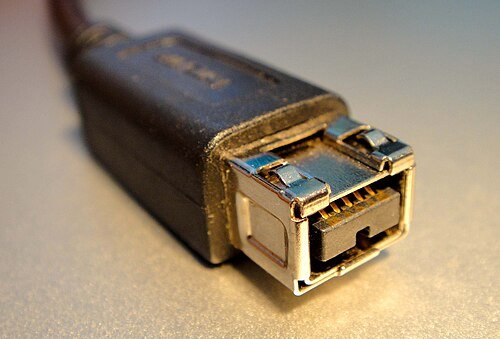
FireWire technology history explains the development of one of the most important high-speed connection standards of the 1990s and 2000s. Known officially as IEEE 1394, FireWire was designed to provide fast data transfers between computers, digital cameras, storage devices, audio equipment, and other peripherals.
Before USB became the dominant connection standard, FireWire offered several features that made it particularly attractive for professional and consumer electronics. Its ability to transfer data quickly, connect multiple devices, support hot-plugging, and deliver real-time data made it especially popular for digital video.
What Was FireWire?
FireWire was a high-speed serial interface developed to connect electronic devices and transfer digital information. Apple played an important role in its development and later popularized the FireWire brand.
The technology was standardized by the Institute of Electrical and Electronics Engineers as IEEE 1394. Sony also adopted the standard under the name i.LINK, while other manufacturers used IEEE 1394 terminology.
Unlike traditional serial interfaces, FireWire was designed for much higher data-transfer speeds and efficient communication between connected devices.
The Early Development of FireWire
The origins of FireWire go back to the 1980s, when Apple was working on a new high-speed serial connection. The goal was to create an interface that could eventually reduce the need for complicated connections between computers and peripherals.
Apple’s work contributed significantly to the development of the IEEE 1394 standard. The technology was designed around a flexible bus architecture that allowed multiple devices to communicate without requiring each peripheral to have a dedicated connection to the computer.
This approach became one of FireWire’s defining characteristics.
IEEE 1394 Becomes a Standard
A major milestone in FireWire technology history came in 1995, when IEEE 1394 was formally standardized.
The original IEEE 1394 standard supported data rates of up to 400 Mbps, depending on the implementation. This was considerably faster than many common interfaces available at the time.
The standard also introduced capabilities such as:
- High-speed digital data transfer
- Device-to-device communication
- Hot-plugging
- Bus power for compatible devices
- Support for real-time data streams
- Connection of multiple peripherals
These features helped FireWire establish a strong position in multimedia and professional computing.
FireWire and Digital Video
One of FireWire’s biggest successes came from the digital video industry.
During the late 1990s and early 2000s, many digital camcorders used FireWire to transfer recorded video to computers. The interface was well suited to video because IEEE 1394 supported isochronous data transfer, which could provide predictable bandwidth for real-time streams.
Video editors could connect a compatible camcorder to a computer and transfer footage for editing.
This made FireWire particularly important for:
- Digital video cameras
- Video editing systems
- Professional production equipment
- Digital audio interfaces
- Multimedia workstations
For many users, FireWire became strongly associated with digital video editing.
FireWire 400
The original version is commonly referred to as FireWire 400 because it supported speeds of up to 400 Mbps.
FireWire 400 typically used a 6-pin connector for computer and peripheral connections. Some smaller devices, particularly portable electronics, used a 4-pin connector that did not provide bus power.
FireWire 400 became common on Apple Macintosh computers and was also available on various Windows PCs and professional workstations.
External hard drives, audio interfaces, digital cameras, and other peripherals could use the interface.
FireWire 800
FireWire technology continued to evolve with IEEE 1394b, commonly marketed as FireWire 800.
Introduced in the early 2000s, FireWire 800 increased the theoretical data rate to 800 Mbps. It also introduced a different 9-pin connector for standard FireWire 800 connections.
The improved version offered greater bandwidth and helped extend FireWire’s usefulness for high-speed storage and professional media applications.
FireWire 800 remained popular among some video professionals, musicians, photographers, and Mac users.
Why FireWire Was Important
Several technical characteristics helped FireWire stand out.
Peer-to-Peer Communication
FireWire could allow compatible devices to communicate directly with each other without requiring constant involvement from the host computer.
This was useful for certain professional and multimedia applications.
Hot-Plugging
Compatible FireWire devices could generally be connected and disconnected while a system was running.
This made external peripherals easier to use.
Bus Power
FireWire could provide electrical power through compatible connections. This meant some external devices could operate without a separate power adapter.
Isochronous Transfers
The technology’s support for isochronous data transfer was particularly valuable for applications requiring consistent data delivery, such as digital audio and video.
FireWire in External Storage
FireWire was also used extensively with external hard drives.
Before USB 3.0 became widespread, FireWire 400 and FireWire 800 provided relatively fast connections for external storage. Professional users could connect large external drives to computers for video projects, backups, and other data-intensive tasks.
FireWire 800 was especially useful for users who needed higher transfer speeds than older USB standards could provide.
FireWire and Professional Audio
The technology also became popular in digital audio.
FireWire audio interfaces allowed musicians and recording engineers to connect multiple channels of digital audio equipment to computers.
Its relatively predictable data transfer characteristics made it useful for professional recording environments.
For a period, FireWire-based audio interfaces were common in home studios, recording studios, and live production setups.
FireWire vs. USB
FireWire and USB competed heavily during the same period.
USB eventually became more widespread because it was inexpensive, supported by a huge range of manufacturers, and integrated into virtually every modern computer.
FireWire, however, had technical advantages for certain applications, particularly professional audio and video.
| Feature | FireWire | USB |
|---|---|---|
| Official standard | IEEE 1394 | USB |
| Common early speed | 400 Mbps | USB 1.1: 12 Mbps |
| Higher version | FireWire 800 | USB 2.0: 480 Mbps |
| Peer-to-peer communication | Supported | More host-centered |
| Real-time media | Strong use case | Widely supported |
| Digital video | Very popular | Later became common |
| Market adoption | Specialized | Very widespread |
The comparison changed significantly as newer USB generations became available.
The Decline of FireWire
The decline of FireWire was gradual rather than sudden.
As USB became faster and increasingly common, manufacturers had fewer reasons to include FireWire ports. USB 2.0 offered a competitive 480 Mbps theoretical speed, while later USB generations increased performance dramatically.
Another important development was the arrival of Thunderbolt, which offered extremely high bandwidth and supported professional storage and multimedia workflows.
Computer manufacturers increasingly removed FireWire ports from newer systems.
Apple, one of FireWire’s most important supporters, eventually moved toward newer connectivity technologies.
FireWire Adapters and Legacy Devices
Although FireWire is no longer a mainstream connection standard, many older devices still depend on it.
People with older DV camcorders, audio interfaces, external drives, or professional equipment may still need FireWire adapters or expansion hardware to connect these devices to modern computers.
However, compatibility can depend on the specific computer, operating system, adapter, and FireWire device.
For older digital video equipment, preserving the appropriate hardware can sometimes be important because modern interfaces do not necessarily provide direct compatibility with legacy FireWire workflows.
The Legacy of FireWire
The significance of FireWire technology history extends beyond the connector itself.
FireWire helped demonstrate the importance of fast serial communication for consumer and professional digital equipment. Its design supported multimedia applications at a time when digital video and computer-based editing were rapidly expanding.
The standard also helped popularize concepts such as device chaining, bus-powered peripherals, hot-plugging, and high-speed digital media connections.
Although FireWire eventually lost its mainstream position, many of its ideas influenced how people expected computer peripherals to work.
Conclusion
The FireWire technology history is closely connected to the growth of digital media and high-speed computer peripherals. Developed with major contributions from Apple and standardized as IEEE 1394, FireWire became an important interface for digital video, external storage, professional audio, and other demanding applications.
FireWire 400 and FireWire 800 provided useful performance during an important period in personal computing. However, the rapid development and widespread adoption of USB and later technologies gradually reduced FireWire’s market presence.
Today, FireWire is primarily a legacy technology, but its role in the development of digital video, audio, and high-speed peripheral connectivity remains an important part of computing history.
Leave a Reply