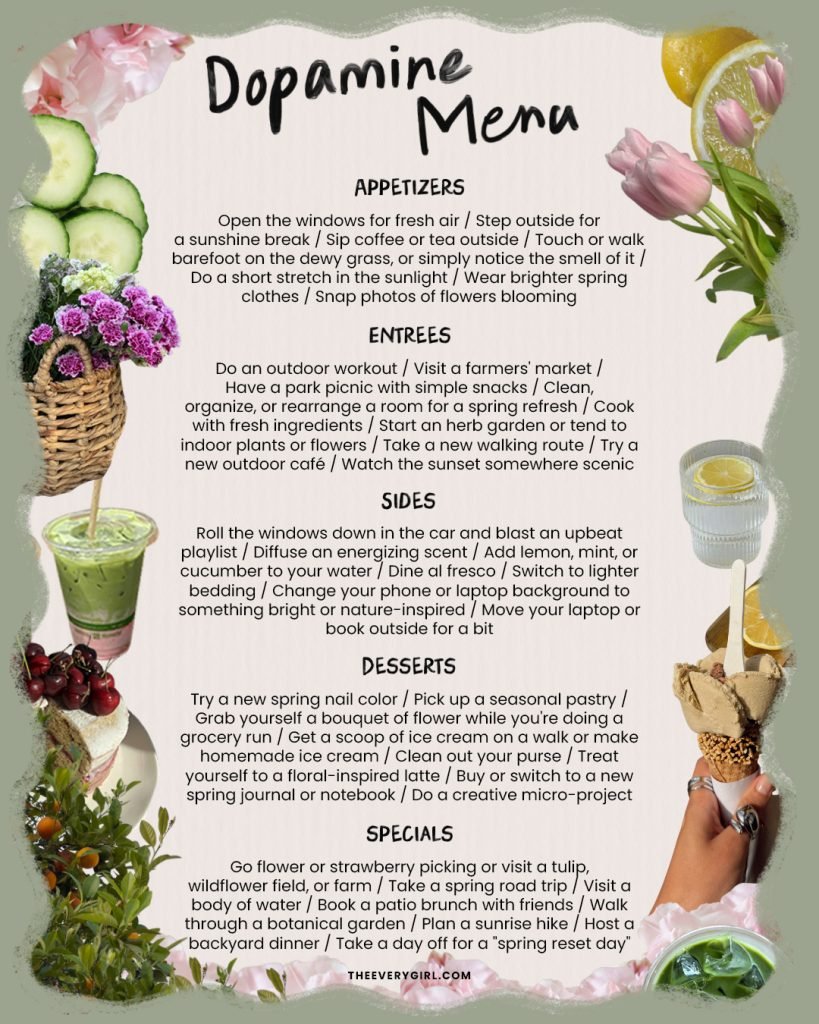
Dopamine menu ideas can make it easier to choose enjoyable activities when you feel bored, distracted, overwhelmed, or unmotivated. Instead of deciding what to do in the moment, a dopamine menu gives you a prepared list of activities that can help you relax, recharge, or make difficult tasks more enjoyable.
The concept is often compared with a restaurant menu. You create different categories of activities, such as quick starters, main activities, side options, desserts, and special treats. The goal is to have different choices available depending on your energy, mood, and available time. UBC Science describes the dopamine menu as a personalized list that can reduce the mental effort involved in deciding what to do when you feel stuck.
What Is a Dopamine Menu?
A dopamine menu is a personalized collection of activities that you enjoy and can turn to when you need stimulation, motivation, relaxation, or a mental break.
The idea was popularized by ADHD advocate Jessica McCabe of How to ADHD. Rather than trying to force yourself to be productive all the time, the menu gives you enjoyable alternatives that can be selected intentionally.
A typical dopamine menu can include:
- Starters: Very short activities
- Main courses: Longer activities that provide deeper satisfaction
- Sides: Things that make another activity more enjoyable
- Desserts: Fun activities that can be easy to overuse
- Specials: Bigger activities saved for occasional occasions
The important part is personalization. An activity that feels rewarding to one person may be boring to another.
Why Use Dopamine Menu Ideas?
One of the biggest advantages of creating a menu is reducing decision-making.
When you are tired or unmotivated, even choosing something enjoyable can feel difficult. Instead of scrolling through social media wondering what to do, you can simply look at your list and choose an activity.
A dopamine menu can also help you distinguish between activities that genuinely refresh you and activities that simply consume your time.
For example, watching an episode of a favorite show may leave you relaxed, while endlessly scrolling through short videos may leave you feeling more distracted. Your menu can prioritize activities that you personally find satisfying.
Dopamine is involved in the brain’s reward system and also plays roles in motivation, learning, memory, and movement. However, a dopamine menu should not be understood as a medical method for controlling dopamine levels.
1. Starter Dopamine Menu Ideas
Starters are activities that take only a few minutes. They are useful when you need a quick change of pace or want to transition into another activity.
Some starter dopamine menu ideas include:
- Make a cup of tea or coffee
- Listen to one favorite song
- Stretch for five minutes
- Take a few deep breaths
- Drink a glass of water
- Step outside for fresh air
- Open a window
- Water your plants
- Send a message to a friend
- Organize your desk
- Doodle on paper
- Pet your dog or cat
- Walk around your room
- Make a quick snack
These activities are particularly useful when you don’t have enough time for a longer break.
For example, if you are working on an assignment and feel stuck, you could listen to one song, stretch, and then return to the assignment.
2. Main Course Dopamine Menu Ideas
Main courses are longer activities that can provide more meaningful enjoyment. They may take anywhere from 20 minutes to several hours.
Examples include:
- Going for a walk
- Exercising
- Cooking a favorite meal
- Reading a book
- Drawing
- Painting
- Writing
- Editing videos
- Playing a musical instrument
- Working on a creative project
- Watching a movie
- Taking a relaxing shower
- Listening to a podcast
- Meeting a friend
- Playing a favorite game
UBC Science gives similar examples, including cooking, creative hobbies, relaxing activities, reading, and listening to podcasts.
The best main-course activities are those that leave you feeling satisfied rather than simply filling time.
For example, spending an hour learning video editing might be more rewarding for you than spending an hour randomly scrolling online.
3. Side Dopamine Menu Ideas
Sides are activities that you combine with something else.
This category is especially useful for boring or repetitive tasks.
For example, you could:
- Listen to music while cleaning
- Listen to a podcast while walking
- Play an audiobook while organizing your room
- Chew gum while studying
- Use a stress ball while reading
- Listen to ambient sounds while working
- Work alongside a friend
- Light a pleasant candle while journaling
UBC Science suggests using sides to make challenging activities more enjoyable, with examples such as background music, fidget objects, scented candles, and mindful snacks.
The idea isn’t necessarily to make every task entertaining. Instead, a small enjoyable element can make an unpleasant task easier to start.
4. Dessert Dopamine Menu Ideas
Desserts are highly enjoyable activities that you might want to use after completing something difficult.
Examples include:
- Watching YouTube
- Watching an anime episode
- Playing a video game
- Checking social media
- Watching a favorite TV show
- Looking at funny videos
- Playing a mobile game
- Rewatching a favorite movie scene
- Browsing interesting content
These activities can be perfectly reasonable parts of your day. The main consideration is whether they are helping you recharge or causing you to lose control of your time.
For example, you might decide to watch one episode after completing a study session rather than opening a social media app whenever you feel bored.
UBC Science specifically places activities such as social media, YouTube, streaming services, and mobile games in the dessert category because they can be enjoyable but are also easy to overuse.
5. Special Dopamine Menu Ideas
Specials are bigger activities that you don’t necessarily do every day.
They could include:
- Going to a concert
- Taking a day trip
- Visiting a new café
- Going on a weekend trip
- Spending a day with friends
- Visiting a new place
- Going to the cinema
- Trying a new hobby
- Planning an outdoor adventure
- Having a full movie night
These activities can give you something positive to look forward to.
Planning and anticipating enjoyable experiences can itself contribute to positive feelings and motivation. Cleveland Clinic notes that imagining and planning future activities can be rewarding.
Dopamine Menu Ideas for Work
You can also create a menu specifically for work or studying.
For example:
Before starting:
- Make tea
- Play one song
- Clear your desk
- Stretch for two minutes
During work:
- Listen to instrumental music
- Use a comfortable workspace
- Keep water nearby
- Use a fidget object
After finishing:
- Watch one episode
- Play a game
- Go for a walk
- Talk with a friend
This approach creates small moments of enjoyment without requiring you to abandon the task completely.
Dopamine Menu Ideas for When You’re Bored
Boredom is one of the best times to use a prepared menu.
Instead of immediately opening social media, look at your options and choose something based on how much energy you have.
- Listen to music
- Stretch
- Make a drink
- Walk outside
- Message someone
- Read
- Exercise
- Cook
- Draw
- Take a walk
- Work on a hobby
- Watch a movie
- Meet a friend
- Work on a creative project
- Play a game
- Explore somewhere nearby
This makes the menu practical because you can choose something that fits the amount of time you actually have.
How to Create Your Own Dopamine Menu
Creating your own menu doesn’t need to be complicated.
Start by writing down 15–30 activities you genuinely enjoy.
Then divide them into categories.
Starters
Choose activities that take less than 10 minutes.
Main Courses
Choose activities that require more time but provide deeper satisfaction.
Sides
Choose things that make boring tasks easier.
Desserts
Choose highly entertaining activities that you want to use intentionally.
Specials
Choose occasional experiences that you look forward to.
You can keep your menu in a notebook, notes app, calendar, or printed sheet.
Example Personal Dopamine Menu
Here’s a simple example:
| Category | Ideas |
|---|---|
| Starters | Music, tea, stretching, fresh air |
| Main Courses | Exercise, reading, gaming, creative work |
| Sides | Music, podcasts, gum, ambient sounds |
| Desserts | YouTube, anime, movies, social media |
| Specials | Cinema, day trip, restaurant, concert |
You can change these activities whenever your interests change.
Dopamine Menu vs. Dopamine Detox
A dopamine menu is sometimes confused with a “dopamine detox,” but they are very different concepts.
A dopamine detox does not literally remove dopamine from the brain. Dopamine is a naturally occurring neurotransmitter that the body needs for normal functions. Cleveland Clinic explains that the popular idea of completely “detoxing” from dopamine is scientifically inaccurate.
Instead of trying to eliminate pleasure, a more practical approach is to pay attention to your habits and make intentional choices.
For example, if social media is taking too much of your time, you might set a specific period for using it and replace some scrolling time with walking, reading, exercising, or another enjoyable activity.
How to Make Your Dopamine Menu More Effective
Keep your menu realistic.
Don’t fill it with activities you think you should enjoy. Include things you actually like.
It can also help to include options with different energy requirements. Some days you may have enough energy to exercise, while on other days you may only want to listen to music or take a short walk.
Another useful strategy is keeping your menu visible. If it is buried inside an app that you rarely open, you may forget about it.
You can also create separate menus for different situations:
- Morning menu
- Work menu
- Study menu
- Evening menu
- Weekend menu
- Low-energy menu
This makes the system easier to use.
Final Thoughts
Dopamine menu ideas can provide a simple way to organize enjoyable activities and make everyday routines more intentional. Instead of automatically reaching for your phone whenever you feel bored or unmotivated, you can choose from a list of activities that match your available time and energy.
The best menu is personal. Include quick activities for short breaks, longer hobbies for deeper enjoyment, useful sides for difficult tasks, entertainment for occasional rewards, and special experiences that give you something to anticipate.
Leave a Reply